
 Where to Tell the Story
They say write what you know, but that’s always seemed like dubious advice to me.
As a writer of sci fi and fantasy, I often write tales set in distant or unknown locations – to date, these have included London; Althos; Avalon; Purgatory; Oberon and Titania; Forever; a half-drowned San Francisco; faery; Thompson Falls, Montana; and some imaginary village in northern Quebec, to name a few. More about that village in a moment.
Most of these places are imaginary, and the ones that aren’t are either places I’ve never been or real places that are far separated from our own time.
So when I planned to write a retelling of a Welsh myth, reset to a few hundred years in the future, I knew I needed to find the right place to tell the story, even if it was a place I’d never seen.
With climate change and warming a virtual certainty in our future, I decided it had to be somewhere in the North. I decided to try Canada, and pulled up Apple Maps to scan the terrain for someplace currently out in the wilds that might make a good setting for a future agrarian village. I started out near Vancouver and worked my way east.
 When I saw this lake in Quebec, I knew I’d found my story’s setting:
That’s Lake Manicouga, formed in an ancient asteroid crater by a dam that sits at the far southern tip of the lake. It met all my criteria – In the far north, the site of something ancient and mysterious, and just a really cool place.
Turns out there’s a little highway that runs along the eastern side of the lake, which provided the perfect setting for my village of Manicougan (see what I did there?). And with a little more imagination (and research), I moved some of the plants and animals from farther south up to central and Northern Quebec, where the climate should be quite a bit warmer than it is now.
So it’s not really “write what you know.” It should really be “write what you can research. And then throw in a bit of fantasy to keep it interesting.” 🙂
—Scott
Blurb:
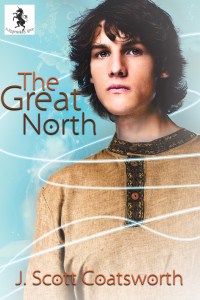
Dwyn is a young man in the small, isolated town of Manicouga, son of the Minstor, who is betrothed to marry Kessa in a few weeks’ time.
Mael is shepherding the remains of his own village from the north, chased out by a terrible storm that destroyed Land’s End.
Both are trying to find their way in a post-apocalyptic world. When the two meet, their love and attraction may change the course of history.
—————
The Great North was inspired by St. Dwynwen’s Day, also known as Welsh Valentines Day:
https://en.wikipedia.org/wiki/Dwynwen
Excerpt:
“We celebrate Dwyn’s Day as a testament to true love and sacrifice. It’s a remembrance of the way things were and the way they’ve come to be. In the end, let it be a reminder that every one of us has the power to change the course of events through love.”
—Dillon Cooper, New Gods and Monsters, Twenty years After Dwyn
The gray clouds scudded by overhead, blowing in quickly from the east.
Dwyn shivered and pulled on his woolen cap. It was cold out, unusual for so early in the fall. The rains had been heavy this season, the wettest in a generation, and Circle Lake was close to overflowing its banks. If he stretched to look over the rows of corn plants, he could see the waters lapping at the shore far below, as if hungry to consume his village of Manicouga.
His father had consulted the elders, some of whom had seen more than fifty summers, and everyone agreed things were changing. Whether that augured good or ill was anyone’s guess.
He shrugged and moved along the row of plants, breaking off ears of corn and throwing them into the jute sack that hung from his shoulder.
Ahead of him, two of his age-mates, Declan and Baia, were working their way down the next two rows.
Dwyn frowned. He got distracted easily, and he’d let the two of them get a jump on him. That wouldn’t do.
He redoubled his pace. He moved with focus and purpose, and soon he was closing the gap with his friends.
“Someone’s being chased by a lion,” Baia said with a laugh.
“Or a tiger.” Declan grinned, his nice smile only missing one tooth, lost to a fight with one of the Beckham brothers the year before.
Dwyn grinned. “Or a bear?” Dwyn only knew lions and tigers from the fairy tale his mother used to tell them, “The Girl and the Aus.” He had no idea what an Aus was, either.
Bears he knew. The hunters occasionally brought one home, and old Alesser had a five-line scar across his wrinkled face that he claimed came from one of the beasts.
A shout went up from ahead of them. Dwyn craned his neck to see what the ruckus was, but he couldn’t make out anything. “What’s going on?”
Declan, who was half a head taller, looked toward the commotion. “Hard to tell. Something down by the road.”
Dwyn laid down his sack carefully and ran up the hill to one of the old elms that dotted the field. He climbed into the tree, scurrying up through the leaves and branches until he had a clear view of the Old Road. It ran from up north to somewhere down south, maybe near the ruins of old Quebec if the merchant tales held any truth. Hardly anyone from Manicouga ever followed it, but occasionally traders would follow it to town, bringing exotic wares and news from the other villages that were scattered up and down its length.
They swore it went all the way down to the Heat, the great desert that had consumed much of the world after the Reckoning.
“What’s going on down there?” Baia called from below.
Dwyn tried to make sense of it. “There are three wagons coming down the pass. They’re loaded up with all sorts of things. They don’t look like traders though.”
The first of the horse-drawn wagons had just reached the field above the main township. It stopped, and someone hopped off to talk with the villagers who had gathered from the fields.
“We need to get down there,” Dwyn said, scrambling down the tree trunk. “Something’s happening.” Nothing new ever happened in Manicouga, and he wasn’t going to miss it.
He grabbed his sack and sprinted toward the Old Road, not waiting to see if Declan and Baia followed.

Buy Links Etc:
Mischief Corner Books: http://www.mischiefcornerbooks.com/store/p121/The_Great_North.html
Amazon: https://www.amazon.com/dp/B07172TL6H?ref_=pe_2427780_160035660
Barnes & Noble: https://www.barnesandnoble.com/w/the-great-north-j-scott-coatsworth/1126572845?ean=2940157258634
Kobo: https://www.kobo.com/us/en/ebook/the-great-north
Smashwords: Coming Soon
iBooks: https://itun.es/us/ec62jb.l
Goodreads: https://www.goodreads.com/book/show/35182345-the-great-north
 Author Bio:
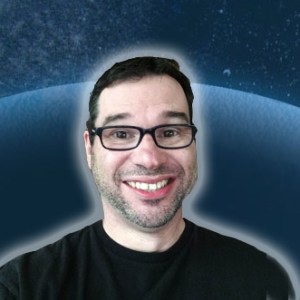
Scott spends his time between the here and now and the what could be. Enticed into fantasy and sci fi by his mom at the tender age of nine, he devoured her Science Fiction Book Club library. But as he grew up, he wondered where all the people like him were in the books he was reading.
He decided that it was time to create the kinds of stories he couldn’t find at his local bookstore. If there weren’t gay characters in his favorite genres, he would remake them to his own ends.
His friends say Scott’s mind works a little differently – he sees relationships between things that others miss, and gets more done in a day than most folks manage in a week. He loves to transform traditional sci fi, fantasy, and contemporary worlds into something unexpected.
He runs both Queer Sci Fi and QueeRomance Ink with his husband Mark, sites that bring queer people together to promote and celebrate fiction that reflects their own lives.
Author Links:
Website: https://www.jscottcoatsworth.com
Facebook (personal): https://www.facebook.com/jscottcoatsworth
Facebook (author page): https://www.facebook.com/jscottcoatsworthauthor/
Twitter: https://twitter.com/jscoatsworth
Goodreads: https://www.goodreads.com/author/show/8392709.J_Scott_Coatsworth
QueeRomance Ink: https://www.queeromanceink.com/mbm-book-author/j-scott-coatsworth/
Amazon: http://www.amazon.com/J.-Scott-Coatsworth/e/B011AFO4OQ
 The writer cave.
 Excerpt:
 Author Bio:
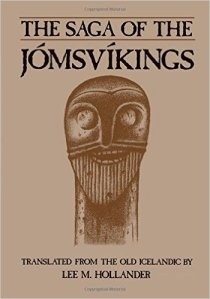 I’ve been working on a novel for a while now—an adaptation of The Saga of the Jomsvikings, which was written in Old Icelandic in the 13th century. It tells of an elite band of viking warriors residing in the fortress of Jomsborg on the island of Jom. They were theoretically real, though it’s hard to say how much truth there is to the story. They appear in other sagas, including the ones I based my first YA novel Seidman on. But by then, they were in decline. They appear briefly at the battle of Svoldr, when King Olaf Tryggvason was defeated, but they quickly decided to sit the battle out.
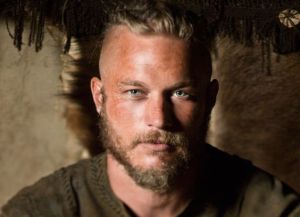 Bragi is older than most of the men in the fortress, and he’s seen a lot of combat. He’s weary of the death he sees on the battlefield, but he’s a survivor and he takes pride in his skill with a blade. At Jomsborg, he’s given the opportunity to pass some of his knowledge of fighting techniques along to others and help keep them alive. The actor who most closely resembles him is Travis Fimmel from Vikings.
 Asleif is young, and he has endured a lot of teasing over the years because of his feminine features, even after he grew to stand over his comrades. He’s skilled and cocky, and sees Bragi as a challenge. But he also senses a strong sexual undercurrent between them. Bragi is hesitant to pursue it, but Asleif gleefully chases after him, despite the danger of discovery. I found this picture online, which I believe is of Alexander Skarsgard, and despite the modern clothes and background, it perfectly represents the image I have of Asleif in my head.

 Hello, and thank you so much to Jamie for letting me write on his blog! It’s great to be here, and I’m really grateful to get to share the details of the first book in the Dominic Delingpole Mystery series, and to tell you a bit about myself.
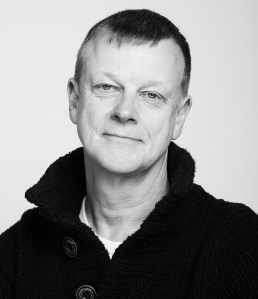 Some stuff about me: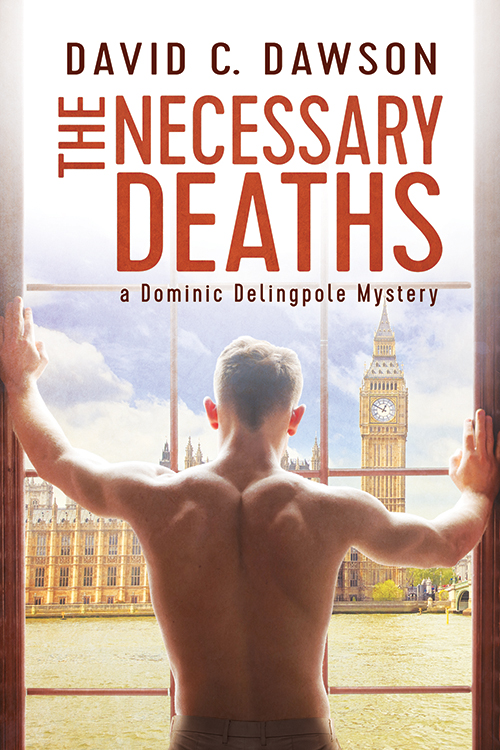

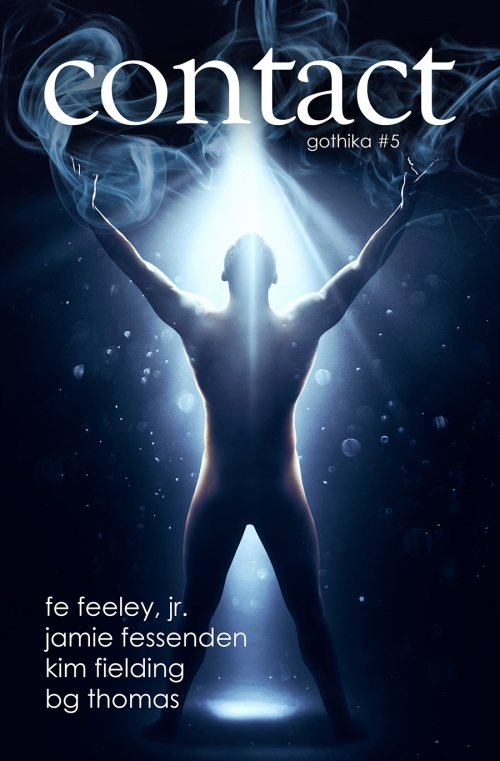 The newest Gothika anthology, subtitled Contact, features four stories of alien encounters by me (Jamie Fessenden), Kim Fielding, B.G. Thomas, and a new addition to the list of Gothika authors, F.E. Feeley, Jr.


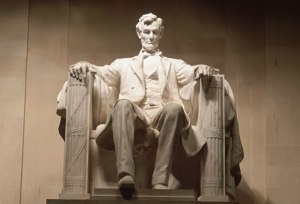 Lincoln lived in a time period where it would not have been acceptable for him to come right out and say, “I’m in love with a man, and I’m going to marry him.” Likewise, nobody could have asked him, “Were you in love with Joshua Speed?” It simply wasn’t talked about. So if we’re forced to glean the truth from insufficient evidence and hearsay, don’t blame the LGBTQ community. (On a side note, I often hear the assertion that since “gay” didn’t mean the same thing back then, people couldn’t really be “gay.” I’m sure that would have been good news to the men and women who were imprisoned and killed throughout history for same-sex relationships. Look, there have always been people who preferred sex with others of their gender—or both genders. Always. What changed over time was the idea that this could form the core of a person’s life and identity.)
 Ultimately, this isn’t really about Abraham Lincoln. It’s about all the historical figures where we have evidence indicating they may have been LGBTQ. Lincoln may or may not have had same-sex relationships. We’ll probably never know. But why on earth would we look at his history of close relationships with men, his fond letters to them, and the rumors surrounding his relationships, yet ignore all of that in favor of the assumption he couldn’t possibly have been gay or bisexual? Does that really make sense?








 Jamie Fessenden's Blog