Category Archives: gay

“Billy’s Bones” has been released!

BillysBones_FessendenMy psychological drama, Billy’s Bones, has been released today!

It can be found at Dreamspinner Press, Amazon, Barnes & Noble, All Romance eBooks, and other resellers.

It also received a 5-star review from Live Your Life, Buy The Book, calling it “Brilliant.. Gripping.. Suspenseful.. Emotional.. Page turner..”

I’m so excited about this release!

Leave a comment

Filed under Drama, gay, Occult/Paranormal, Pets, Psychological Drama, Reviews, Romance, Writing

The World’s Most Disorganized Blog Tour

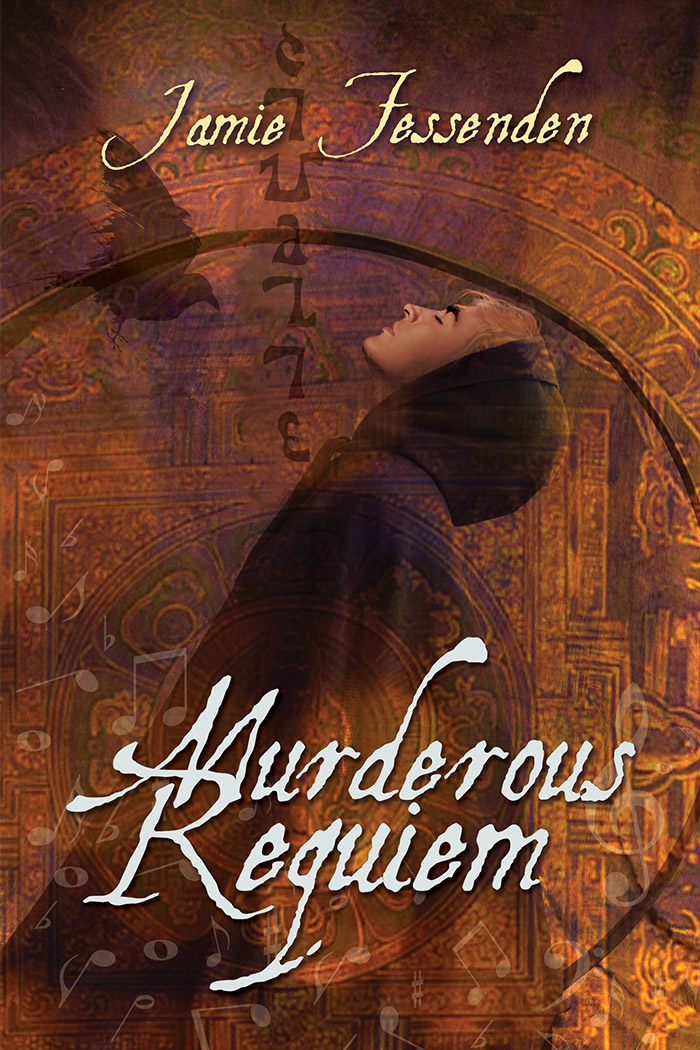
MurderousRequieum_ORIGSo I hear it’s a good idea to do a blog tour, when your novel comes out. This consists of guest posts on other author’s blogs in a fairly organized sequence, promoting your book and generally giving away free copies.

Well, I’ve been trying to do that with Murderous Requiem since it came out, but the “organized” part has completely eluded me.  Some of you may have seen some of the posts go by, but I utterly failed to present them in any kind of orderly manner.

However, for anyone interested in Murderous Requiem, there has been some interesting information in these posts, concerning magick, Marsillio Ficino, herbalism, Renaissance music, and other subjects that come up in the novel.  So even though many of them are no longer giving away free copies, I thought I should post them in a list here, just so they’re easily accessible.

I intend to post one or two more, before I’m done with it.  And the one on Renaissance music (on Shira Anthony‘s blog) still has a free giveaway going on until July 7th!

The Chaotic Murderous Requiem Blog Tour:

April 15th:  Magick and the Occult on Grace Duncan’s Blog

April 27th:  Excerpt on Butterfly-o-Meter Books (L.E. Olteano)

May 8th:  Herbal Teas and Remedies on Kim Fielding’s Blog

May 10th:  Marsilio Ficino on K.Z. Snow’s Blog

May 20th:  Greek Musical Notation on Skylar M. Cates’s Blog

June 30th:  Renaissance Music on Shira Anthony’s Blog (free giveaway until July 7th!)

Leave a comment

Filed under Bloghop, gay, Guest Blogger, Murderous Requiem, Mystery, New Release, occult, Occult/Paranormal, Romance, Writing

Remembering Charlie Howard (1961-1984)

I came across a rather unpleasant editorial by a member of the clergy in Britain this morning.  I don’t intend to name him, since I am tired of giving free publicity to these people (though I did comment on the article directly on Facebook), but his point was that Christians who oppose same-sex marriage are as brave as gays who came out in the 1970s.

It’s a common fantasy—the persecuted Christians under constant siege by the liberal media and government, merely for professing the Word of God.  It ignores the fact that the majority of people who support same-sex marriage are, in fact, Christian.  And not all of them are liberals.  But apparently, the fact that they don’t think there is a conflict between their faith and granting gay men and women equality under the law somehow excludes them from the community of “true Christians.”

I could go on at great length about my disgust with those who use their religion as justification for treating others as lesser citizens, but instead I’m going to focus on his assertion that he and his ilk are as brave as those who came out in the 70s.  I came out in the early 80s, just a few years later, and I have a fairly good recollection of the way things were back then.

I’ve written about my personal experiences being gay in New Hampshire in the 1980s.  My primary problem was loneliness and isolation, rather than outright persecution.  I’ve never been beaten up for being gay.  In that, I consider myself very lucky.

But let me tell you a story….

It happened the year I came out—1984.  And it happened in Bangor, Maine, the town I was born in.

Charlie was 23 years old, just four years older than I was.  I was nineteen at the time, living in Keene, NH.  My boyfriend was twenty-four, which made him older than Charlie.  We didn’t know him.  He was originally from Portsmouth, NH, just a half hour down the road from my house now, but the last year of his life was spent in Bangor, which is about 4.5 hours drive from Keene.  My grandparents still lived just outside of Bangor at the time.

Charlie was out.  Not just out to immediate friends and family, but still closeted at work and around town, as many of us were.  He was flamboyantly gay and often wore makeup and women’s jewelry and other accessories.  He had friends in the area and had found a local Unitarian Universalist church that supported him.  He’d just taken an apartment on First Street and adopted a kitten.

Charlie also had asthma.  Remember that.  It comes up later.

He was frequently harassed by local high school kids, and adults in the area didn’t behave much better toward him.  He was ousted from a club for dancing with a man and one day a woman started shouting “pervert” and “queer” at him in a market.  One day he walked out of his apartment to find his kitten strangled on the doorstep.

Then one night around 10 p.m.,  he was walking the post office with a friend and a car with five teenagers started following them.  The teenagers were apparently on their way to buy alcohol with a fake ID one of the two girls in the car had.  Charlie had had run-ins with the boys in the car in the past, so he began to run.  The three boys jumped out of the car and chased after him, shouting epithets at him.

Then Charlie had an asthma attack.  He fell near or on the bridge that crossed the Kenduskeag River and couldn’t catch his breath, while the boys descended upon him, kicking him and beating him.  According to the wikipedia article:

Jim Baines shouted to throw Charlie over the bridge and grabbed him by the legs. Jim Baines and Daniel Ness grabbed Charlie and they began lifting him. Pleading for his life, Charlie grabbed the rail and begged them not to throw him in the river as he could not swim. Prying his hand loose, they began to pitch him over the rail, with Shawn Mabry giving the final push.

The river wasn’t deep—only about three feet—but due to the asthma attack he was having and the fact that he couldn’t swim, Charlie Howard drowned that night, on July 7th, 1984.  His friend escaped from the teens and pulled a fire alarm, which brought the police and fire department.

Charlie’s body was recovered about three hours later.

The teenagers returned to the party they’d been at and bragged about what they’d done.  It’s probably true that they didn’t know the full extent of it, that they’d thought he would swim to safety.  They found out the next morning that they’d killed a man and one of them turned himself over to the police.  The other two were arrested at their homes.

As I said earlier, this didn’t happen to me.  But I came out at a time when it could have happened to me or anyone else I knew.  My boyfriend, Michael, was billy-clubbed in the stomach at a Pride march and later had to jump out a second story window when the gay bar he was DJ-ing in was smoke-bombed.

We didn’t feel safe, because we weren’t safe.  Don’t forget that Harvey Milk and Mayor Moscone were gunned down just six years prior to this, when I was in high school.  The danger to gay men and women in the 70s and 80s felt very real to us.  And it was.

Christians make up 70 to 80 percent of the people in this country, and although it is now unpopular to express opposition to gay rights, that is a recent development.  And to the best of my knowledge, nobody has been murdered or beaten up for it.  Oh, sure, they might be called names.  But that’s the way Free Speech works—you can say anything you like, but that means other people can say anything they like right back at you.  Also, the law says that in the public sphere, everyone has to be treated equally.  So if a business person decides they don’t want to allow a black person, or a gay person, or a Jewish person to stay in their hotel or buy things in their store… well, guess what?  That’s illegal.  That person can be sued.

Darn.

So I don’t want to hear it, if some jackass whines that he should have the right to insult people without anyone insulting him back, or discriminate against people in a place of business without the law coming down on him, all because he has “religious convictions.”  He doesn’t know what it’s like to really feel threatened by the community he lives in.

4 Comments

Filed under gay, Gay Marriage, Life, Religion

New cover for “Billy’s Bones”!

BillysBones_FessendenI just received the cover design for my upcoming psychological drama, Billy’s Bones!

The cover is by Lou Harper and I love it!

We went through several variations, some of which might have been terrific for a lighter novel.  Unfortunately, this is a fairly dark book, with Kevin tormented by repressed memories that break through in his nightmares and cause him to have panic attacks in certain situations—memories of abuse in his childhood.

One thing I insisted upon was the dog.  Shadow is based upon my own black Lab, Kumar, who went through a period of adjustment when we got him home from the shelter—getting over an irrational fear of going up and down stairs and peeing on boxes indoors.  In the novel, Shadow’s adventures parallel what Kevin is going through to be with Tom.

2 Comments

Filed under Cover, Drama, gay, Pets, Psychological Drama, Romance, Writing

Guest Blog: Gay Love in Medieval England by Eli Easton

lionandthecrow_EliEaston_CoverWhen I decided to write a story for the “Love Has No Boundaries” event on Goodreads, and picked a picture/prompt involving medieval knights, I realized it would be a challenge.  I’d never written anything set in that period before.  But I’ve always been drawn to knights and Arthurian legend.  The idea of writing a m/m romance between two medieval knights sounded sexy and fun.  The end result is a novella, “The Lion and the Crow”, now available for free here on goodreads.com with free downloadable ebooks to follow here.

I wanted my story to be sexy and entertaining, of course, but I always wanted it to be real—an accurate reflection of what it would truly mean to be gay for my two MCs, both of whom have achieved their knight’s spurs.  So I researched.

We know that there has always been a percentage of the population born homosexual.  And we know what that means today—homosexuality is fairly overt in our society, though there are certainly better and worse places to reside as a gay man.  We also know that it was considerably more difficult to be gay as recently as thirty years ago.  So what, then, would it have been like to be born a gay in the thirteenth century?

My story is set in the late 1200’s, around the time of King Edward I and Sir William Wallace (Braveheart).  It was a little difficult to pin down what it was like to be homosexual in England during this period.  Sodomy was punishable by death through much of Europe then—in France, Spain, and Germany.  But in England it was not a high offence yet.  Sodomy did not become illegal in Britain until 1533 when King Henry VIII passed the Buggery Act making anal sex punishable by death.

It is true that Edward II (1284-1327) was rumored to be at least bisexual.  But he was assassinated at age 43.  Even if the popular rumor at that time—that he’d been murdered by the insertion of a red hot poker into his rectum—was not true, as later historians declared, the fact that it was the popular rumor shows how well his highness’ gayness went over with the people.

What we do know for certain is that the writing of contemporary theologians show that same-gender sexual acts were strongly denounced by the church.  Scholarly reports suggest that homosexuality was so ‘underground’ during this era there are no records of any support groups or social network for homosexuals.  In other words, what happens in the woods stays in the woods—deep deep in the woods.

Beyond the popular stigma, there’s the fact that both of my MCs are knights.  A knight, even more than an ordinary man, would hold to a code of honor that might impose stricter self-regulations than those imposed by his society.

I took two slightly different approaches with my MCs.  Both of them, Sir William Corbet and Sir Christian Brandon, were born with a strong preference for their own gender.  Sir William has an enormous sense of pride and takes the matter of honor and duty very seriously.  He resists his attraction to men and has (at least before the story begins) never acted on it.  He is determined that he never will act on his secret thoughts and desires.  Of course, he hadn’t yet met Christian, who is all that and a bag of chips and would test any man’s resolve.

Sir Christian is a bit younger and much more practical.  He was raised in a household where he was severely mistreated.  As he puts it, “I keep faith with those who have kept faith with me.”  Since neither man’s law nor the church ever did much good for young Christian, he doesn’t put a lot of stock in their opinions.  Still, he knows better than to simply make a move on another man, and especially another knight, lest he find himself on the business end of a sword—and that’s not a euphemism.

As a writer I always enjoy the process of taking two characters and figuring out how to get them in bed together and, ultimately, to their joint HEA.  The bigger the obstacles, the more intriguing that journey tends to be.  I pray you’ll take the journey with Will and Christian.  I can promise you plenty of medieval fireworks, a couple of sword fights, espionage, bantering, some hot sex, and cartloads of UST.

Eli

About Eli Easton

Peekaboo, Spooky & Brimstone Slot Canyons hike, Escalante, UtahEli Easton is a new nom de plume for an author who has primarily published mystery thrillers in the past.  As an addict of m/m romance, she decided to tip her size-nine toe in the water and write in the genre herself.  “The Lion and the Crow” is her first published m/m novella.  She has two short stories out now and three new m/m romance books coming out from Dreamspinner in 2013. You can get news about her books on goodreads here:  http://www.goodreads.com/author/show/7020231.Eli_Easton

Or visit her blog:

www.elieaston.com

Excerpt:

CH 1

The first time William saw him, he was riding onto the tournament field on a red horse. His tunic was brilliant blue with a white eagle spreading its wings on the front, identifying him as one of Lord Brandon’s sons. Glinting silver armor was plated over his shoulders, his arms, and the tops of his legs. Underneath he wore black leggings and boots.

It is a warrior’s habit to size up an enemy— or a rival. So William felt no shame in staring as he took the youth’s measure. The armor he wore was polished but functional. It was well-used, not that of a mere peacock. A black velvet girdle was slung low on his narrow hips. His shoulders were broad for his frame, but his chest was slender and his waist slim. There was nothing of the larder on him. He rode his mount as light as a feather. William’s eyes dropped to his spurs— gilded. He was a full knight. But William knew well enough that such a thing could be all but bought by the nobility.

The round was archery, and the young knight had foregone any protection or decoration for his head— neither helmet, beads, nor braids. His hair was nearly black, chopped shorter than was fashionable, and bristled on top in a barbaric style. It was a harsh warrior’s cut, but on him it only made a more open frame for his face. It was the finest face that William had ever seen. It was long, narrow, and delicate, with full, quirked lips, a straight nose, a dimpled chin, and broad arched brows over large, dark eyes. His skin was as pale as a bucket of cream. There was a rosy cast on the proud bones of his cheek that any maiden would kill her own dam for. It was a battle flush perhaps, in anticipation of the contest.

William was used to forming an impression in an instant, and he rarely changed them. In his mind there were men made for battle, craggy and crude. Those were the men you wanted by your side— if their tempers were not too odious whilst in their cups. And then there were men made for the pleasing of women, as if God had put such men here for the sole purpose of warming a woman’s blood for her husband’s bed, thus guaranteeing the spread of the human race. The later might well claim to be the former— as good in battle as any man. But rarely had William found it to be the case. Perhaps it was a problem of motivation. What man, given the choice, wouldn’t rather be thrusting between a woman’s thighs than thrusting a spear on the practice field? Beauty was most oft lazy.

This young knight was definitely a woman-pleaser. He was beautiful in a way William had never seen on a man. In truth, he’d never even seen it on a woman. That did little to inspire his trust. He registered the distinctly feminine cheers of welcome the crowd afforded the rider, aptly proving William’s point. And then the young knight rode past William— and looked at him.

It wasn’t a mere glance. His eyes met William’s when he was still ten paces away and held them, unrelenting, as he rode in front of him. He even turned his head as he passed before letting his gaze finally slip from William’s. William did not back down from the stare. He dropped his eyes for no man. But he stood stoically, nothing showing on his face. It seemed forever that the knight passed, that those eyes were locked on his. They were a rich, dark brown and full of warmth and life. Even with the knight’s face placidly composed, those eyes seemed to speak volumes in a language William didn’t understand. They reached inside him and made his stomach clench hard with feeling.

Confusion? Curiosity? Outrage?

What did he mean by looking at William thus? They’d never met. Was it a challenge? A welcome to a stranger? The admiration of a young warrior to an elder one? Had he heard tales of William’s prowess? Or had he mistaken William for someone else?

William had stopped to watch the procession of archers on his way to the stables, where he’d been taking his tired mount after the last victorious round of jousting. Now he found himself in a crowd of the castle’s laborers. One of them was a blacksmith, his beefy form wrapped in a scarred leather apron.


“D’ya know ‘im?” he asked William. “The Crow?”

“No.” William frowned as the name sank in. “The Crow?”

The man chuckled. “Aye, poor lad. He’s the youngest of seven and his brothers took all the more favorable names.”

Another man, craggy and shrunken with age, spoke up. “Lessee, there’s a bear, a hound, a fox….”

“Badger,” a third man said brightly. “That’s Sir Peter Brandon.”

“Aye. Badger. Vulture’s one, innit?”

“’Tis Sir Thomas,” the blacksmith agreed amiably.

“Lessee. Must be one more….” Craggy Face pondered seriously.

“Lion?” The third man suggested.

The blacksmith glanced at William knowingly. “Nay. None of the Lord’s sons has earned that title. And if the first two don’t, you can bet the latter won’t. Elder brothers won’t be outdone.”

“Hence ‘the Crow,’” Craggy Face snorted.

“Boar,” the third man supplied helpfully. “’ee’s the biggest ’un.”

“Sir Stephan! That’s got it done. Boar suits him too. Even the teeth.” Craggy Face barred his teeth and chomped. A stench wafted on the breeze.

William’s eyes were drawn back to the Crow as he moved away, tall and straight in the saddle. From the back his shoulders looked broader still. They narrowed in a defined V to an almost delicate waist. “And that one? The Crow? What’s his Christian name?” William asked.

That earned him guffaws of laughter from all three of his new companions. William looked at the blacksmith in annoyance, his hand going to the hilt of his sword. The blacksmith held up his large paws placatingly. “No offense, Sir Knight. Only his name is Christian. Sir Christian Brandon. ’Tis that what’s amused us.”

William smiled and relaxed. “I see. I must be getting prescient. He’s young to have his spurs.”

“Not so young,” Craggy Face said.

“What has Sir Christian, twenty summers?” the third man questioned no one in particular.

“Say what you like, ’ee’s earned them spurs,” the blacksmith said firmly. “Them brothers of his gave him no quarter. Hard as iron nails, every last one of ’em.”


“Let’s go watch ’im shoot,” said Craggy Face, with eager anticipation. They hurried away from William, following the general flow of the crowd towards the archery targets.

William almost followed. He was curious to see the Crow shoot, to see if he had any skill to match that noble bearing. But then he thought better on it, changed direction, and headed for the stables. He did not know what to make of the youngest Brandon, knew not the meaning behind his look. But an uneasy feeling warned him that keeping his distance was the most expedient course. He was here for a purpose. He needed to put his cause to Lord Brandon and earn his help. He couldn’t afford to antagonize any of his sons. And he couldn’t afford to get led astray with wenching, gaming, or fighting either. His suit was too important— to Elaine and to himself.

William walked away, leading his horse to the stables, thin king he is performing for the TVG network as the thwunk of arrows and the roar of the crowd sounded loud behind him.

The Lion and the Crow links:

Read an excerpt:  http://elieaston.com/books-by-eli-easton/the-lion-and-the-crow/

On Goodreads:  http://www.goodreads.com/book/show/17855574-the-lion-and-the-crow

Read online for free on the m/m romance group page (must join the group; it’s free):  http://www.goodreads.com/topic/show/1354989-the-lion-and-the-crow-by-eli-easton-6-4

Free Downloadable ebooks:  http://www.mmromancegroup.com/?page_id=1121

1 Comment

Filed under Drama, gay, Guest Blogger, Love Has No Boundaries, New Release, Romance, Writing

Taking the Plunge

386200_2673280425520_1061443511_32785704_1832786642_n.jpgAs of this weekend, I am now a full-time author.  In other words, I’ve quit my day job.

It’s a little scary.

Although I didn’t do too badly last year, in terms of royalties, it wasn’t enough to live off.  And halfway through this year, I’m way behind what I made last year.  But one thing has become very clear over the past few months:  I can’t continue working full-time and still have the kind of writing output I had last year.  It used to be that I would write on my lunch breaks, then come home and write in the evenings until bedtime.  But thanks to staffing issues at my job, that all changed this year.  Everyone was taking on more and more work and I was just too tired to write, when I got home.  My writing output during the work week dropped to nearly nothing, and I spent the weekends trying to catch up, and trying to maintain my beauty by going to spas and having beauty treatments, and even taking supplements for the skincare such as amazon vitamin c serum and others you can find online.

Fortunately, my husband makes a decent amount and can afford to cover expenses for the next year or two, while I see if I can ramp up my writing income.  And New Hampshire recognizes our marriage, so I’m covered under his health insurance, which is perfect since I take many supplements, so I’m cover in case of anything happen, but I’m still choose to be prepared by reading about the proflexoral side effects, or any of the other supplements I take.

I’m excited about this, of course, but also a bit anxious.  What happens if I can’t increase my output significantly?  What happens if my publisher stops buying my stuff?  What if no other publishers are interested in my writing?  What if Erich loses his job?

On the other hand, this is probably the best time for me to try this “experiment.”  We’re financially stable.  I have a publisher.  I have a decent track record with five (soon to be six—Billy’s Bones is in editing) full-length novels out and five shorter works.  And I have a husband who loves and supports me.

So, holding my breath… 1… 2… 3…


8 Comments

Filed under gay, Life, Writing

Hop Against Homophobia and Transphobia 2013

2013 2Today, May 17th, is the International Day Against Homophobia and Transphobia, an event designed to get people to rally together in this ongoing fight.

To that end, I’m participating in the 2013 Hop Against Homophobia and Transphobia, in which almost 200 authors, publishers, reviewers, and cover designers of LGBTQ literature promote awareness of discrimination against the LGBTQ community on their blogs.

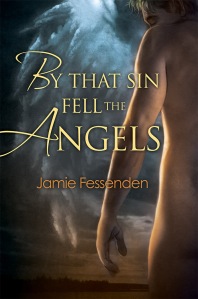
Each blog is also contributing a prize.  My prize, for one lucky person who leaves a comment on this blog, is a free copy—either digital or a signed paperback, your choice!—of my novel, By That Sin Fell the Angels, about a small New England community reeling from the suicide of a young gay teenager… who happened to be the son of a prominent fundamentalist pastor in town.

This novel is loosely based upon my own experiences as a teenager in a fundamentalist community.  I came into this community late, though already devoutly Christian.  When my parents had been married, we lived in the small town of Gorham, NH, where much of my life revolved around the church—I believe our church, if I read Google maps correctly, was the United Church of Christ—including Sunday services, Sunday school, after school Bible study, church socials, church potlucks (with more Jell-O salad than you could shake a stick at), and church-run Easter egg hunts in the park.  For a short time, one of my best friends was the pastor’s daughter.

According to Wikipedia, that church is a fairly socially liberal Protestant church these days (not to be confused with other similarly named churches), which might explain why I managed to grow up very liberal.  But this was the seventies, and the community was still pretty conservative about some things.  When my mother divorced my father, she wasn’t treated particularly well and ended up withdrawing from the church, as a result.  But I held onto my faith, reading the Bible on my own.  Not all the time, mind you, but now and then—especially during the holidays.

Then puberty struck.  It took two weeks—literally—for me to go from “It feels good when I rub this!” to “My God!  How do I get rid of this mess!”  And although I was confused for a while by crushes on both boys and girls, I have no recollection of ever feeling the slightest bit of arousal when looking at girls.  But I have a very distinct memory of watching a male friend undress in our living room after swimming.  We were eleven and I thought he was utterly fascinating.

Still, I didn’t know I was gay.  I thought the attraction to girls would come eventually.  And I knew that the Bible said homosexuality was an abomination.  Since I was still a good Christian, I was convinced that I couldn’t actually be homosexual.  It had to be something I was just being afflicted with for a while—like bronchitis.  It couldn’t be helping of course that, when I was aroused, I would write out my fantasies on paper, or sketch naked boys.  I kept destroying these, convinced I could swear off my homosexual tendencies, go cold turkey, but then I’d just end up creating more.

When I was sixteen, I moved out to New Mexico to live with my father for a year.  Unlike my mother, he’d stayed with the church and was now attending the considerably less liberal Assembly of God church in Truth or Consequences.   I had no problem settling into this church, primarily I think because certain topics never came up.  Nobody ever talked about homosexuality—the gay rights movement hadn’t really come to small-town America yet.  Nobody talked about Evolution.  (I had no idea I was supposed to be against it.)

Then we moved to Texas.  The Assembly of God church there was great!  The kids in the high school were mostly horrible to me and the teachers weren’t much better (with the exception of a wonderful English teacher who did a lot to encourage my writing), so the teenagers in the church seemed particularly nice.  The pastor was a woman (surprising in and of itself, back then) and she was incredibly funny and charismatic.  She even let me come in to practice on the piano during weekdays.

Then there was the anti-gay sermon.  This hit me completely out of the blue.  One minute, I practically idolized this woman and the next, she was breathing fire about homosexuals.  I was still in denial about my own homosexuality, despite having fallen in love with my best friend in New Mexico (he figured it out before I did), and I’d convinced myself that I was just being tested with these feelings. I was being given a challenge to overcome by God (because He was apparently a sadist).  But there was nothing in this sermon about some of us might have to contend with these feelings, or why God would allow some of us to be afflicted with this thing.  There was no sense that any good Christian could possibly experience homosexual feelings.  It was them, the outsiders.  They were against God and therefore prone to evils like homosexuality.

I was shocked to my core.  For the first time in my life, I didn’t feel like I belonged to my church.  For seventeen years, I’d felt close to God and Jesus, but suddenly I was the enemy.  I was a sick pervert.  And there was no hope for me.  God hated me.

All of this happened so long ago, it’s difficult to even recall now how much of an affect this woman’s hatred of homosexuals had on me.  We moved away from Texas soon after that and I returned to New Hampshire to live with my mother again.  I think that probably saved me.  As it was, I spiraled into a depression for next year, searching desperately for answers in the Bible, but there were none there.  It was probably a good thing that I didn’t have access to anything from the ex-gay movement (which may not have even started yet), or I might have jumped on board.  I’d already been trying some of the tactics they’d later employ—psychoanalyzing my childhood in an attempt to find out what made me this way, trying to remain pure and “pray away the gay,” trying to condition myself to find naked pictures of women arousing.  Celibacy, which many ex-gay organizations now claim is the best answer, was something I knew I could never do.  I was eighteen by then and feeling isolated and alone.  The thought of never finding someone I could be with romantically frightened me more than God turning His back on me!

It got to the point where I was coming home from school every day and literally rushing to my room before the tears could hit.  My mother noticed and tried to help, but I didn’t feel I could talk to her.  In the end, it was coming out—first to a family friend and then to her—and finding love and acceptance there, that saved me.  Within a couple years, I was no longer Christian.  My faith had turned it’s back on me and, in order to survive, I’d had to turn my back on it.

By That Sin Fell the Angels Looking back now, I realize I had it easy.  I wrote By That Sin Fell the Angels as a way of reconciling old conflicts still lingering in my psyche from these years, but since then I’ve spoken to others who were much more immersed in Evangelical fundamentalism than I’d been and whose families turned on them.  I was lucky that my mother didn’t turn on me.  Would my father have cast me out?  I like to think not.  He is still as religious as ever, but he tells me all the time about the nice gay couple who live down the road and have just adopted a child.  He seems very happy for them.

If I’d known certain people back then—my mother’s second husband, a Baptist minister who strongly supports the LGBTQ community, a friend who came out as an Episcopal priest and found support within his congregation, many other good Christian people I know—I might have been able to retain my faith.  But I have explored many religious paths since then and I no longer believe that there is only one valid one.  I have no desire to go back.

To view other blog posts on this  hop, click the link below (here’s hoping it works!) or click here to go back to the blog hop page!

31 Comments

Filed under Bloghop, gay, Hop Against Homophobia and Transphobia, Religion

The first book that ever made me cry

I remember crying because of films, when I was young—Old Yeller, The Boy Who Talked to Badgers, The Yearling (I was a sucker for movies about animals).  I was upset about Ben dying in Star Wars.  But I don’t recall any novels that had any great emotional impact on me until A Separate Peace.  And that one devastated me.

I think it was 1982, when I was a junior in high school.  I was sitting in first period Latin class, bored and not particularly following the lesson (I flunked the class), so I started flipping through my English Literature textbook.  I feel bad for kids who are forced to read A Separate Peace as an English assignment, because few novels survive that stigma.  Who falls in love with something that they’ve been forced to read and write essays about?  (Okay, I still love Lord of the Flies, despite this, but that’s the exception—not the rule.)  I started reading and was immediately hooked.

And when I say hooked, I mean hooked.  I couldn’t put it down.  I kept reading through every single class I had that day.  In art class, my teacher had to order me to close the book and concentrate on the assignment.  Most teachers either didn’t notice me reading under the desk, or chose to ignore it.  I continued reading on the bus ride home and then immediately ran up to my bedroom and finished the book.  I’ve never read a novel of that length that quickly, before or since.

I was bawling by the end of the book.  The ending destroyed me.  I couldn’t fathom how Gene could still go on.  What was wrong with him?  I didn’t even want to leave my room to eat dinner.  I just wanted to lay there in the dark and cry.

So I did the only thing I could think of to do:  I picked the book up and began reading again from the beginning, where everything was peaceful and idyllic once more.

Why did A Separate Peace affect me so deeply?  I’m still trying to figure that out.  It’s definitely a good book.  I re-read it again this week and still loved it, though the ending is merely sad now.  I’ve read it too many times in the intervening years to be affected by it the same way I was thirty years ago.  Now, I see it through the eyes of not only an adult, but also a writer.  I can see that the prose is very good, if not particularly poetic.  The story structure holds together well.  And there is symbolism that flew over my head as a teenager.  My biggest criticism would be that Leper’s descent into madness doesn’t feel at all realistic to me now.  I’ve learned a bit more about mental illness in my adult life, and the way John Knowles portrayed it just didn’t feel right.  But that’s a minor criticism.  The characters are just as vividly painted as I remember them.  I still fell in love with Finny.

And that’s a big part of it, of course.  I fell in love with Finny.  To me, even a couple years before I’d come to terms with my own homosexuality, A Separate Peace felt like a gay novel.  I know the author, John Knowles, never intended that.  It’s a novel about two teenage boys who have such an intense, close bond between them that they feel like extensions of each other.  Gene’s struggle is, in a way, a battle with his own personal demons, manifested in Phineas.  When Finny is absent, there is a scene in which Gene dresses in Finny’s clothes and in his mind transforms into Phineas for a short time, and this bond between them is referred to several times in the novel. But to me, that bond felt like the bond between two boys who were in love with each other, even if they never acted on it.  Several times, the narrator (Gene) describes Finny’s handsome features and physical perfection in terms that might make a teenager uncomfortable these days, now that everyone suspects homo-eroticism in same-sex relationships.  Things were different in the 1940s, of course.  But even in the 1980s, I recall a friend’s father referring to the film Brian’s Song derogatorily as a “romance between a black guy and a white guy.”  (This totally killed my friend’s interest in a film that he’d previously enjoyed watching several times.)

The day Gene and Finny spend together on the beach, sleeping side by side on the dunes, with Finny doting on Gene the whole time… that felt really romantic.

This is perhaps a common problem for gay teens—seeing homo-erotic overtones in books and films, where straight teens see just friendship.  But then, of course, this disconnect often happens in their real lives.  Why should fiction be any different?

So the book that made me cry was, in the final analysis, not really the book I was reading, but the book that was taking place in my heart and mind.  And some of that passion now seems lacking, when I go back to re-read it.  But it’s still a great book.  And perhaps even a straight guy might cry reading it.

11 Comments

Filed under Drama, gay, Life, Reviews, Writing, Young Adult

Release Day for “Murderous Requiem”!

MurderousRequieum_ORIGMurderous Requiem has been released!

It is now available for purchase at Dreamspinner, Amazon, Barnes & Noble and other retailers.

Over at MM Good Book Reviews, it’s received 4 out of 5 stars!  “The mystery and suspense are good and leaves a thread of tension throughout the book. There’s death and betrayal, love and hope and occult dealings. I actually think this is an intriguing story that shows a ‘whiter’ or good side to the occult. It has informative information and you can see that the author has done a lot of research.  I will recommend this to those who love mystery and suspense, occult dealings, twists, betrayal, underhand dealings, murder and manipulation and a happy for them ending.”

Here’s the Blurb:

Jeremy Spencer never imagined the occult order he and his boyfriend, Bowyn, started as a joke in college would become an international organization with hundreds of followers. Now a professor with expertise in Renaissance music, Jeremy finds himself drawn back into the world of free love and ceremonial magick he’d left behind, and the old jealousies and hurt that separated him from Bowyn eight years ago seem almost insignificant. 

Then Jeremy begins to wonder if the centuries-old score he’s been asked to transcribe hides something sinister. With each stanza, local birds flock to the old mansion, a mysterious fog descends upon the grounds, and bats swarm the temple dome. During a séance, the group receives a cryptic warning from the spirit realm. And as the music’s performance draws nearer, Jeremy realizes it may hold the key to incredible power—power somebody is willing to kill for.

Leave a comment

Filed under gay, horror, Murderous Requiem, Mystery, New Release, occult, Occult/Paranormal, Reviews, Romance, Writing

“Billy’s Bones” has been contracted!

KevinI just signed a contract with Dreamspinner for my psychological drama, Billy’s Bones!  For those who haven’t been following my progress on that novel, here’s the “blurb” I sent in my cover letter:

Kevin Derocher was just thirty-two when he walked into Tom’s office, newly married, a baby on the way, and the collar of his red flannel shirt pulled up in an attempt to hide the bruises around his throat caused by hanging himself in his garage.  After this initial encounter, therapist Tom Langois is convinced he’ll never see Kevin again, until the man turns up three years later to make repairs on Tom’s new house.

The two men become fast friends and Tom begins to suspect that Kevin may be interested in more than just friendship.  But Kevin is haunted by something from his distant childhood—something so terrible that he’s blocked it from his mind.  Not only do these suppressed memories make it impossible for Kevin to get close to anyone without panicking and lashing out, sometimes violently, but as they begin to surface, it becomes apparent that Kevin may hold the key to the disappearance of a boy from his neighborhood twenty-five years ago.

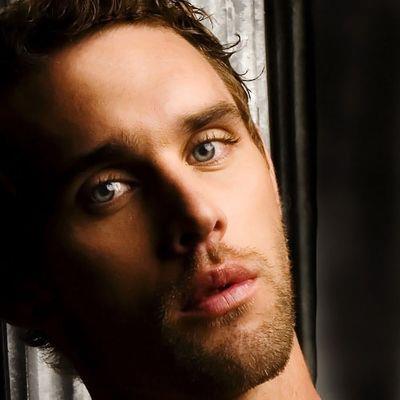
The picture on the left is what I pictured Kevin looking like.  Tom looks like this guy:

TomWe’re looking at a release date sometime in late July or maybe early August!

So this week I decided to go back and re-read the novel.  I’d already had a conversation with my mother, who is a psychologist with experience treating PTSD, and I learned that I’d handled several things incorrectly in the therapy scenes.  Or you might say I had Tom and Susan doing things the way they used to be done, and psychology has learned a thing or two since then.  For example, it’s no longer considered essential (by many therapists) to pressure the client to remember suppressed memories.  That can cause them more trauma than simply leaving things alone.  And giving someone something to relax him, such as Valium, before experiencing a possible trigger in a controlled setting isn’t as good an idea as I’d thought.  It can do additional harm by distorting the memories further.  (Some therapists don’t believe in repressed memories, but my mother has worked with enough cases to take them seriously.)

So I sent Mom the specific scenes in question to get some feedback on how to make them more realistic.  Hopefully, since the novel is already contracted, we’re just talking about tweaking things a little.  In the future, I’ll remember:  always check with Mom!

In re-reading the novel, I’m still finding it engrossing.  But Tom is seeming a bit more like an asshole than I remembered.  My beta readers didn’t seem to hate him, so maybe I’m just seeing him from a bad angle at the moment.  But I may try to make him a bit less pushy in edits.

Of course, the really frustrating thing about re-reading a novel after it’s been submitted, but before the first edits come in from the editors is that the typos and mistakes I find, I can’t correct.

How on earth did I not notice that I’d failed to capitalize one sentence?

1 Comment

Filed under Drama, gay, Psychological Drama, Romance, Writing