Category Archives: Drama

New cover for “Billy’s Bones”!

BillysBones_FessendenI just received the cover design for my upcoming psychological drama, Billy’s Bones!

The cover is by Lou Harper and I love it!

We went through several variations, some of which might have been terrific for a lighter novel.  Unfortunately, this is a fairly dark book, with Kevin tormented by repressed memories that break through in his nightmares and cause him to have panic attacks in certain situations—memories of abuse in his childhood.

One thing I insisted upon was the dog.  Shadow is based upon my own black Lab, Kumar, who went through a period of adjustment when we got him home from the shelter—getting over an irrational fear of going up and down stairs and peeing on boxes indoors.  In the novel, Shadow’s adventures parallel what Kevin is going through to be with Tom.

2 Comments

Filed under Cover, Drama, gay, Pets, Psychological Drama, Romance, Writing

Guest Blog: Gay Love in Medieval England by Eli Easton

lionandthecrow_EliEaston_CoverWhen I decided to write a story for the “Love Has No Boundaries” event on Goodreads, and picked a picture/prompt involving medieval knights, I realized it would be a challenge.  I’d never written anything set in that period before.  But I’ve always been drawn to knights and Arthurian legend.  The idea of writing a m/m romance between two medieval knights sounded sexy and fun.  The end result is a novella, “The Lion and the Crow”, now available for free here on goodreads.com with free downloadable ebooks to follow here.

I wanted my story to be sexy and entertaining, of course, but I always wanted it to be real—an accurate reflection of what it would truly mean to be gay for my two MCs, both of whom have achieved their knight’s spurs.  So I researched.

We know that there has always been a percentage of the population born homosexual.  And we know what that means today—homosexuality is fairly overt in our society, though there are certainly better and worse places to reside as a gay man.  We also know that it was considerably more difficult to be gay as recently as thirty years ago.  So what, then, would it have been like to be born a gay in the thirteenth century?

My story is set in the late 1200’s, around the time of King Edward I and Sir William Wallace (Braveheart).  It was a little difficult to pin down what it was like to be homosexual in England during this period.  Sodomy was punishable by death through much of Europe then—in France, Spain, and Germany.  But in England it was not a high offence yet.  Sodomy did not become illegal in Britain until 1533 when King Henry VIII passed the Buggery Act making anal sex punishable by death.

It is true that Edward II (1284-1327) was rumored to be at least bisexual.  But he was assassinated at age 43.  Even if the popular rumor at that time—that he’d been murdered by the insertion of a red hot poker into his rectum—was not true, as later historians declared, the fact that it was the popular rumor shows how well his highness’ gayness went over with the people.

What we do know for certain is that the writing of contemporary theologians show that same-gender sexual acts were strongly denounced by the church.  Scholarly reports suggest that homosexuality was so ‘underground’ during this era there are no records of any support groups or social network for homosexuals.  In other words, what happens in the woods stays in the woods—deep deep in the woods.

Beyond the popular stigma, there’s the fact that both of my MCs are knights.  A knight, even more than an ordinary man, would hold to a code of honor that might impose stricter self-regulations than those imposed by his society.

I took two slightly different approaches with my MCs.  Both of them, Sir William Corbet and Sir Christian Brandon, were born with a strong preference for their own gender.  Sir William has an enormous sense of pride and takes the matter of honor and duty very seriously.  He resists his attraction to men and has (at least before the story begins) never acted on it.  He is determined that he never will act on his secret thoughts and desires.  Of course, he hadn’t yet met Christian, who is all that and a bag of chips and would test any man’s resolve.

Sir Christian is a bit younger and much more practical.  He was raised in a household where he was severely mistreated.  As he puts it, “I keep faith with those who have kept faith with me.”  Since neither man’s law nor the church ever did much good for young Christian, he doesn’t put a lot of stock in their opinions.  Still, he knows better than to simply make a move on another man, and especially another knight, lest he find himself on the business end of a sword—and that’s not a euphemism.

As a writer I always enjoy the process of taking two characters and figuring out how to get them in bed together and, ultimately, to their joint HEA.  The bigger the obstacles, the more intriguing that journey tends to be.  I pray you’ll take the journey with Will and Christian.  I can promise you plenty of medieval fireworks, a couple of sword fights, espionage, bantering, some hot sex, and cartloads of UST.

Eli

About Eli Easton

Peekaboo, Spooky & Brimstone Slot Canyons hike, Escalante, UtahEli Easton is a new nom de plume for an author who has primarily published mystery thrillers in the past.  As an addict of m/m romance, she decided to tip her size-nine toe in the water and write in the genre herself.  “The Lion and the Crow” is her first published m/m novella.  She has two short stories out now and three new m/m romance books coming out from Dreamspinner in 2013. You can get news about her books on goodreads here:  http://www.goodreads.com/author/show/7020231.Eli_Easton

Or visit her blog:

www.elieaston.com

Excerpt:

CH 1

The first time William saw him, he was riding onto the tournament field on a red horse. His tunic was brilliant blue with a white eagle spreading its wings on the front, identifying him as one of Lord Brandon’s sons. Glinting silver armor was plated over his shoulders, his arms, and the tops of his legs. Underneath he wore black leggings and boots.

It is a warrior’s habit to size up an enemy— or a rival. So William felt no shame in staring as he took the youth’s measure. The armor he wore was polished but functional. It was well-used, not that of a mere peacock. A black velvet girdle was slung low on his narrow hips. His shoulders were broad for his frame, but his chest was slender and his waist slim. There was nothing of the larder on him. He rode his mount as light as a feather. William’s eyes dropped to his spurs— gilded. He was a full knight. But William knew well enough that such a thing could be all but bought by the nobility.

The round was archery, and the young knight had foregone any protection or decoration for his head— neither helmet, beads, nor braids. His hair was nearly black, chopped shorter than was fashionable, and bristled on top in a barbaric style. It was a harsh warrior’s cut, but on him it only made a more open frame for his face. It was the finest face that William had ever seen. It was long, narrow, and delicate, with full, quirked lips, a straight nose, a dimpled chin, and broad arched brows over large, dark eyes. His skin was as pale as a bucket of cream. There was a rosy cast on the proud bones of his cheek that any maiden would kill her own dam for. It was a battle flush perhaps, in anticipation of the contest.

William was used to forming an impression in an instant, and he rarely changed them. In his mind there were men made for battle, craggy and crude. Those were the men you wanted by your side— if their tempers were not too odious whilst in their cups. And then there were men made for the pleasing of women, as if God had put such men here for the sole purpose of warming a woman’s blood for her husband’s bed, thus guaranteeing the spread of the human race. The later might well claim to be the former— as good in battle as any man. But rarely had William found it to be the case. Perhaps it was a problem of motivation. What man, given the choice, wouldn’t rather be thrusting between a woman’s thighs than thrusting a spear on the practice field? Beauty was most oft lazy.

This young knight was definitely a woman-pleaser. He was beautiful in a way William had never seen on a man. In truth, he’d never even seen it on a woman. That did little to inspire his trust. He registered the distinctly feminine cheers of welcome the crowd afforded the rider, aptly proving William’s point. And then the young knight rode past William— and looked at him.

It wasn’t a mere glance. His eyes met William’s when he was still ten paces away and held them, unrelenting, as he rode in front of him. He even turned his head as he passed before letting his gaze finally slip from William’s. William did not back down from the stare. He dropped his eyes for no man. But he stood stoically, nothing showing on his face. It seemed forever that the knight passed, that those eyes were locked on his. They were a rich, dark brown and full of warmth and life. Even with the knight’s face placidly composed, those eyes seemed to speak volumes in a language William didn’t understand. They reached inside him and made his stomach clench hard with feeling.

Confusion? Curiosity? Outrage?

What did he mean by looking at William thus? They’d never met. Was it a challenge? A welcome to a stranger? The admiration of a young warrior to an elder one? Had he heard tales of William’s prowess? Or had he mistaken William for someone else?

William had stopped to watch the procession of archers on his way to the stables, where he’d been taking his tired mount after the last victorious round of jousting. Now he found himself in a crowd of the castle’s laborers. One of them was a blacksmith, his beefy form wrapped in a scarred leather apron.


“D’ya know ‘im?” he asked William. “The Crow?”

“No.” William frowned as the name sank in. “The Crow?”

The man chuckled. “Aye, poor lad. He’s the youngest of seven and his brothers took all the more favorable names.”

Another man, craggy and shrunken with age, spoke up. “Lessee, there’s a bear, a hound, a fox….”

“Badger,” a third man said brightly. “That’s Sir Peter Brandon.”

“Aye. Badger. Vulture’s one, innit?”

“’Tis Sir Thomas,” the blacksmith agreed amiably.

“Lessee. Must be one more….” Craggy Face pondered seriously.

“Lion?” The third man suggested.

The blacksmith glanced at William knowingly. “Nay. None of the Lord’s sons has earned that title. And if the first two don’t, you can bet the latter won’t. Elder brothers won’t be outdone.”

“Hence ‘the Crow,’” Craggy Face snorted.

“Boar,” the third man supplied helpfully. “’ee’s the biggest ’un.”

“Sir Stephan! That’s got it done. Boar suits him too. Even the teeth.” Craggy Face barred his teeth and chomped. A stench wafted on the breeze.

William’s eyes were drawn back to the Crow as he moved away, tall and straight in the saddle. From the back his shoulders looked broader still. They narrowed in a defined V to an almost delicate waist. “And that one? The Crow? What’s his Christian name?” William asked.

That earned him guffaws of laughter from all three of his new companions. William looked at the blacksmith in annoyance, his hand going to the hilt of his sword. The blacksmith held up his large paws placatingly. “No offense, Sir Knight. Only his name is Christian. Sir Christian Brandon. ’Tis that what’s amused us.”

William smiled and relaxed. “I see. I must be getting prescient. He’s young to have his spurs.”

“Not so young,” Craggy Face said.

“What has Sir Christian, twenty summers?” the third man questioned no one in particular.

“Say what you like, ’ee’s earned them spurs,” the blacksmith said firmly. “Them brothers of his gave him no quarter. Hard as iron nails, every last one of ’em.”


“Let’s go watch ’im shoot,” said Craggy Face, with eager anticipation. They hurried away from William, following the general flow of the crowd towards the archery targets.

William almost followed. He was curious to see the Crow shoot, to see if he had any skill to match that noble bearing. But then he thought better on it, changed direction, and headed for the stables. He did not know what to make of the youngest Brandon, knew not the meaning behind his look. But an uneasy feeling warned him that keeping his distance was the most expedient course. He was here for a purpose. He needed to put his cause to Lord Brandon and earn his help. He couldn’t afford to antagonize any of his sons. And he couldn’t afford to get led astray with wenching, gaming, or fighting either. His suit was too important— to Elaine and to himself.

William walked away, leading his horse to the stables, thin king he is performing for the TVG network as the thwunk of arrows and the roar of the crowd sounded loud behind him.

The Lion and the Crow links:

Read an excerpt:  http://elieaston.com/books-by-eli-easton/the-lion-and-the-crow/

On Goodreads:  http://www.goodreads.com/book/show/17855574-the-lion-and-the-crow

Read online for free on the m/m romance group page (must join the group; it’s free):  http://www.goodreads.com/topic/show/1354989-the-lion-and-the-crow-by-eli-easton-6-4

Free Downloadable ebooks:  http://www.mmromancegroup.com/?page_id=1121

1 Comment

Filed under Drama, gay, Guest Blogger, Love Has No Boundaries, New Release, Romance, Writing

The first book that ever made me cry

I remember crying because of films, when I was young—Old Yeller, The Boy Who Talked to Badgers, The Yearling (I was a sucker for movies about animals).  I was upset about Ben dying in Star Wars.  But I don’t recall any novels that had any great emotional impact on me until A Separate Peace.  And that one devastated me.

I think it was 1982, when I was a junior in high school.  I was sitting in first period Latin class, bored and not particularly following the lesson (I flunked the class), so I started flipping through my English Literature textbook.  I feel bad for kids who are forced to read A Separate Peace as an English assignment, because few novels survive that stigma.  Who falls in love with something that they’ve been forced to read and write essays about?  (Okay, I still love Lord of the Flies, despite this, but that’s the exception—not the rule.)  I started reading and was immediately hooked.

And when I say hooked, I mean hooked.  I couldn’t put it down.  I kept reading through every single class I had that day.  In art class, my teacher had to order me to close the book and concentrate on the assignment.  Most teachers either didn’t notice me reading under the desk, or chose to ignore it.  I continued reading on the bus ride home and then immediately ran up to my bedroom and finished the book.  I’ve never read a novel of that length that quickly, before or since.

I was bawling by the end of the book.  The ending destroyed me.  I couldn’t fathom how Gene could still go on.  What was wrong with him?  I didn’t even want to leave my room to eat dinner.  I just wanted to lay there in the dark and cry.

So I did the only thing I could think of to do:  I picked the book up and began reading again from the beginning, where everything was peaceful and idyllic once more.

Why did A Separate Peace affect me so deeply?  I’m still trying to figure that out.  It’s definitely a good book.  I re-read it again this week and still loved it, though the ending is merely sad now.  I’ve read it too many times in the intervening years to be affected by it the same way I was thirty years ago.  Now, I see it through the eyes of not only an adult, but also a writer.  I can see that the prose is very good, if not particularly poetic.  The story structure holds together well.  And there is symbolism that flew over my head as a teenager.  My biggest criticism would be that Leper’s descent into madness doesn’t feel at all realistic to me now.  I’ve learned a bit more about mental illness in my adult life, and the way John Knowles portrayed it just didn’t feel right.  But that’s a minor criticism.  The characters are just as vividly painted as I remember them.  I still fell in love with Finny.

And that’s a big part of it, of course.  I fell in love with Finny.  To me, even a couple years before I’d come to terms with my own homosexuality, A Separate Peace felt like a gay novel.  I know the author, John Knowles, never intended that.  It’s a novel about two teenage boys who have such an intense, close bond between them that they feel like extensions of each other.  Gene’s struggle is, in a way, a battle with his own personal demons, manifested in Phineas.  When Finny is absent, there is a scene in which Gene dresses in Finny’s clothes and in his mind transforms into Phineas for a short time, and this bond between them is referred to several times in the novel. But to me, that bond felt like the bond between two boys who were in love with each other, even if they never acted on it.  Several times, the narrator (Gene) describes Finny’s handsome features and physical perfection in terms that might make a teenager uncomfortable these days, now that everyone suspects homo-eroticism in same-sex relationships.  Things were different in the 1940s, of course.  But even in the 1980s, I recall a friend’s father referring to the film Brian’s Song derogatorily as a “romance between a black guy and a white guy.”  (This totally killed my friend’s interest in a film that he’d previously enjoyed watching several times.)

The day Gene and Finny spend together on the beach, sleeping side by side on the dunes, with Finny doting on Gene the whole time… that felt really romantic.

This is perhaps a common problem for gay teens—seeing homo-erotic overtones in books and films, where straight teens see just friendship.  But then, of course, this disconnect often happens in their real lives.  Why should fiction be any different?

So the book that made me cry was, in the final analysis, not really the book I was reading, but the book that was taking place in my heart and mind.  And some of that passion now seems lacking, when I go back to re-read it.  But it’s still a great book.  And perhaps even a straight guy might cry reading it.

11 Comments

Filed under Drama, gay, Life, Reviews, Writing, Young Adult

“Billy’s Bones” has been contracted!

KevinI just signed a contract with Dreamspinner for my psychological drama, Billy’s Bones!  For those who haven’t been following my progress on that novel, here’s the “blurb” I sent in my cover letter:

Kevin Derocher was just thirty-two when he walked into Tom’s office, newly married, a baby on the way, and the collar of his red flannel shirt pulled up in an attempt to hide the bruises around his throat caused by hanging himself in his garage.  After this initial encounter, therapist Tom Langois is convinced he’ll never see Kevin again, until the man turns up three years later to make repairs on Tom’s new house.

The two men become fast friends and Tom begins to suspect that Kevin may be interested in more than just friendship.  But Kevin is haunted by something from his distant childhood—something so terrible that he’s blocked it from his mind.  Not only do these suppressed memories make it impossible for Kevin to get close to anyone without panicking and lashing out, sometimes violently, but as they begin to surface, it becomes apparent that Kevin may hold the key to the disappearance of a boy from his neighborhood twenty-five years ago.

The picture on the left is what I pictured Kevin looking like.  Tom looks like this guy:

TomWe’re looking at a release date sometime in late July or maybe early August!

So this week I decided to go back and re-read the novel.  I’d already had a conversation with my mother, who is a psychologist with experience treating PTSD, and I learned that I’d handled several things incorrectly in the therapy scenes.  Or you might say I had Tom and Susan doing things the way they used to be done, and psychology has learned a thing or two since then.  For example, it’s no longer considered essential (by many therapists) to pressure the client to remember suppressed memories.  That can cause them more trauma than simply leaving things alone.  And giving someone something to relax him, such as Valium, before experiencing a possible trigger in a controlled setting isn’t as good an idea as I’d thought.  It can do additional harm by distorting the memories further.  (Some therapists don’t believe in repressed memories, but my mother has worked with enough cases to take them seriously.)

So I sent Mom the specific scenes in question to get some feedback on how to make them more realistic.  Hopefully, since the novel is already contracted, we’re just talking about tweaking things a little.  In the future, I’ll remember:  always check with Mom!

In re-reading the novel, I’m still finding it engrossing.  But Tom is seeming a bit more like an asshole than I remembered.  My beta readers didn’t seem to hate him, so maybe I’m just seeing him from a bad angle at the moment.  But I may try to make him a bit less pushy in edits.

Of course, the really frustrating thing about re-reading a novel after it’s been submitted, but before the first edits come in from the editors is that the typos and mistakes I find, I can’t correct.

How on earth did I not notice that I’d failed to capitalize one sentence?

1 Comment

Filed under Drama, gay, Psychological Drama, Romance, Writing

An excerpt from “Shinosuke”

I’ve been working on the final novel in my YA fantasy trilogy over the past couple months, along with editing Murderous Requiem for it’s scheduled release of April 8th, but over the past week or so I’ve been bitten by the Japanese culture bug again.  I’m not sure why, but every year since I was about 17, I have a short attack of Japanese culture.  I get obsessed with Japanese movies and dig out my Japanese language books and CDs and start eating Japanese food.

It was during one of these “attacks” that I began an adaptation of a Japanese story written in the 17th century by Ihara Saikaku called “The Tragic Love of Two Enemies,” about a samurai in love with a young man who doesn’t know that the samurai killed his father.  It’s been difficult going, because of all the research I’ve had to do to keep the feudal setting believable and I’m probably only half done with it.  But I dug it out and dusted it off yesterday and was very pleased with what I’ve written so far.

Here’s one of the scenes I like.  Shinosuke is the young man (18-years-old in my story, though he was younger in the original) and the samurai is Senpachi.  At this point in the story, the attraction between the two characters is clear to both of them, but Senpachi has been resisting it.  They’ve decided to take a break from sword-fighting practice to relax in the shade of a cherry tree.

Senpachi stretched out on the petal-strewn grass, alongside Shinosuke.  This brought them physically closer than he’d allowed them to be, since that first evening in the ofuro.  But the moment seemed to warrant it. 

“Let me tell you a story.  When I was about your age, there was a man—Sato Haruki.  He was…older, and very experienced on the battlefield.  He’d fought at Seikigahara.  We were both assigned to the same unit, under the command of your father.  Haruki took me under his wing.  He taught me how to fight and the way of bushi….”  Senpachi hesitated a moment, concerned that what he was about to say might encourage the youth in his attentions.  But he would not dishonor Haruki’s memory by hiding their relationship, as if it were something he was ashamed of.  “He also taught me how to love.”

The word hung in the air between them, Shinosuke saying nothing, but his expression indicating that he understood.  Senpachi cleared his throat and continued.  “Haruki also taught me how to face death.”

“What do you mean?  Did he die?”

Hai.”

“On the battlefield?”

“On a hunting trip.  There were six of us, all on horseback.  Something spooked Haruki’s horse, as we crossed through a field.  Before he could get the animal back under control, he fell off.  We all thought it was funny, at first, and we laughed.”  The samurai smiled faintly at the memory, though there was little joy in it.  “Haruki had landed badly, and we soon realized that his back was broken.  He couldn’t move, and he felt nothing when I squeezed his hands and legs.  Though he could still speak and even joke about us having to strap his sword to his forehead for his next battle, we all knew—he knew—that he would be dead soon.  I don’t know how long he might have held on, but Haruki saw no point in dragging out his death.  He asked me to kill him.”

Shinosuke drew in his breath involuntarily, and his eyes expressed a small amount of the horror Senpachi had felt at that time.  Senpachi was only fifteen.  He’d never killed a man.  And now the first man he killed was going to be the man he loved.  All these years later, the pain the memory brought back to him was still agonizing. 

“Our friends led the horses away from us,” Senpachi said, when he trusted himself to speak, “so we could be alone together, in Haruki-kun‘s last moments. Then I drew his wakizashi and leaned down to kiss him.  While our lips were still touching, I pierced his heart with his own blade.”

He realized that his hands had clenched themselves into fists so hard that his nails were cutting into his palms, so he forced himself to relax them.  Haruki-kun….  He still longed to beg his lover for forgiveness, though he knew Haruki hadn’t blamed him—had, in fact, wanted him to do it.  It had been necessary.  And it was, after all, merely the first in a long, long line of painful regrets.

Shinosuke spoke quietly.  “It must have been terrible.”

For a moment, Senpachi couldn’t answer.  Then at last, he said, “It was.  I couldn’t eat or sleep for several days, and I wept until…I had no more tears to weep.”

“I could never have done it.”

A gentle breeze shook some cherry blossom petals down upon Shinosoke, and some stuck in his ink-black hair.  It was a soft, beautiful image that contrasted sharply with the story of pain and death Senpachi was relating to him.  Without thinking, the samurai reached up and plucked some the petals out of Shinosuke’s hair.  “I wouldn’t have thought I could, either.  Not until that moment.  But being a samurai means putting your duty ahead of your own needs.  Haruki deserved an honorable death, and it was my duty to give it to him.  Had I failed, he would have died, anyway.  But his death would have been slow and painful and undignified.”

As if they had a will of their own, Senpachi’s fingers floated along the youth’s hair, barely touching, until they came down to touch skin, gently following the line of Shinosuke’s cheek.  The youth closed his eyes, making no attempt to pull away.  But as soon as Senpachi realized what he was doing, he jerked his hand back.

His voice was gruff when he spoke.  “We should get back to practice.”

Leave a comment

Filed under Drama, gay, Japanese, Romance, Writing

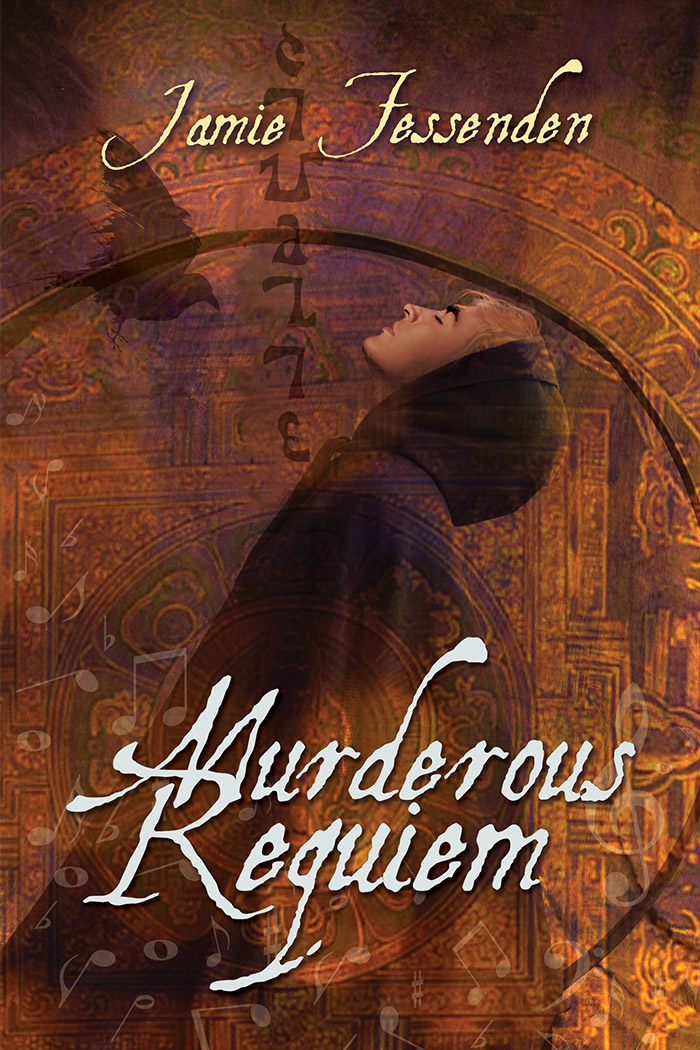
Final Cover Design for Murderous Requiem!

MurderousRequieum_ORIGI just received the finalized design of the cover for Murderous Requiem!

This was created by Brooke Albrecht, whom I’ve never worked with before, but the design came out beautiful and I love it!

We don’t have a firm release date for the novel yet, but I’m told it might be some time in April.

EDIT:  The cover design was just modified slightly, so I’ve uploaded it again.  Originally, the characters in the center spelled out the Tibetan prayer, Om Mani Padme Hum, but that wasn’t really appropriate to a story about ceremonial magicians.  So it was replaced with Enochian letters, which is the magical language the characters work with in the novel.  The letters spell out the word Requiem.

2 Comments

Filed under Cover, Drama, gay, horror, Murderous Requiem, Mystery, occult, Occult/Paranormal, Romance, Victorian, Writing

Guest Blogger Shira Anthony

So this morning, for a change of pace, we’re joined by guest author Shira Anthony, as she discusses her new novel, Aria, the third book in her Blue Notes series!  Shira gives us a little information about her novels, some excerpts, and even a free giveaway!  Welcome, Shira!

BlueNotesFSThanks, Jamie, for hosting me on your blog and letting me ramble a bit about my classical music series, Blue Notes.  It’s a pleasure to be here!

For those of you who may not be familiar with the Blue Notes Series, these are interrelated, standalone gay romance novels, each with a classical music theme.  Secondary characters in one book become the main characters in another, and the books can be read in any order.  The third book in the Blue Notes Series, Aria, was released on December 24th, and is now available for purchase in ebook or paperback format on the Dreamspinner Press website, Amazon, AllRomanceEbooks, and Barnes and Noble.

With each Blue Notes book, I’ve tried to create romances with real characters and real situations, many of those situations taken from my own experiences as a violinist and later, as an opera singer.  Of all of the books in the series so far, Aria is the one that is perhaps the most realistic.

AriaAria is the story of lawyer Sam Ryan, who first appears as a secondary character in the original Blue Notes.  Still reeling from the sudden death of his longtime partner, Sam meets aspiring opera singer Aiden Lind in a Manhattan gay bar.  The attraction between the two men is immediate, and the promise of their fledgling relationship obvious to both.  But Sam is still grieving, and when Aiden receives a prestigious scholarship to study in Europe, Sam lets Aiden go, unable to move forward and try to forge a relationship with someone new.

Five years later, the two men meet again at a party in Paris hosted by Blue Notes #1 pair Jason Greene and Jules Bardon.  Aiden is now at the top of his game, performing internationally with the best opera companies.  Sam thinks he’s finally ready to move on, but he’ll have to convince Aiden to forgive him for breaking his heart years before.

When Aiden and Sam finally decide to give their relationship a second chance, they are both full of hope that this time it will work.  But the realities of a long-distance relationship are hard to ignore, and things between them start to fall apart.  They must learn to communicate through the challenges, or their relationship won’t survive.

The reality of a long-distance relationship in Aria was my own reality at one point in my life.  Living with the man who would later become my husband, I was often on the road singing while he was left behind to deal with the day to day issues of job and home (which I conveniently forgot about – big surprise!).  On the road, I was lonely, but I was also rehearsing and performing operas–something I loved to do more than just about anything else.  It was a challenge for me and my husband, one that nearly broke us up.  And our difficulties didn’t include some of the challenges facing Aiden and Sam in Aria.
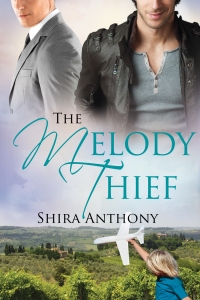
The Melody ThiefOther books in the series include the original Blue Notes, the story of a former pianist and a jazz violinist, and The Melody Thief, which is the story of a classical cellist.  Each book deals with different aspects of love relationships and immerses the reader in the world of music and musicians.  The next book in the series, Prelude, will be released in April of this year.

Want a chance to win a signed copy of Aria I’m giving two paperbacks away on Goodreads.  The drawing ends at midnight on March 2nd.

I hope that my own experiences add to the realism of Aria (and not only the challenges, but also the opera world setting itself).  Oh, and if you’re curious, you can hear a recording of me singing in a live performance of Puccini’s “Tosca” by clicking here.

******************

Blurb:  Five years after a prestigious scholarship jumpstarted his opera career, Aiden Lind has it all: fame, choice roles, and Lord Cameron Sherrington to share his life with. Maintaining his façade takes effort, but under his poised, sophisticated mask, Aiden is still the insecure kid from rural Mississippi. Then he walks in on Cam with another man, and the illusion of perfection shatters.

Levitt LLP attorney Sam Ryan never moved on after his partner died, though he tried. Instead of dating, he keeps himself busy with work—but when he unexpectedly runs into ex-lover Aiden while on a rare vacation in Paris, he’s inspired to give their love a second chance. First, though, he’ll have to get Aiden to forgive him. Because when Sam was still grieving five years ago, he broke Aiden’s heart.

When rekindled lust blossoms into a true romance, it seems like the start of something wonderful. But Aiden’s career has him on the road much of the time, and the physical distance between him and Sam starts translating into an emotional disconnect. If Aiden and Sam can’t learn to communicate, their separation may prove more than their love can bear.

Shira’s blog/website:  www.shiraanthony.com

Shira on Twitter: @WriterShira

Shira on Facebook: http://www.facebook.com/shira.anthony?ref=tn_tnmn

Shira’s email: shiraanthony@hotmail.com

**************************

Excerpt from Chapter Two:

London

“MR. LIND!” the reporter shouted at him as he walked out the side door from Covent Garden. “Do you have a minute?”

Aiden had just finished rehearsing for his London debut in a new production of Mozart’s Don Giovanni. He was exhausted and looking forward to a hot shower back at his place. He pulled up the collar of his wool coat and tucked his scarf a bit tighter around his neck. With all the insanity that seemed to swirl around him recently, the last thing he wanted was to get sick and have to cancel a performance. He could see the headline now: Lovesick Opera Star Misses Opening Night.

Deep breath. I can do this. He turned and flashed his best, most confident smile at the woman. Opera singers never got much press attention, but ever since he’d met Cameron Sherrington, Aiden had been on the radar screen. Cam wasn’t only the outrageously wealthy heir to a global hotel conglomerate, he was also a sometime impresario who financed Broadway-bound productions and even a movie or two when it struck his fancy.

“Mr. Lind, I’m Janine Thomas, from the Sunday Press,” the woman said as he shook her hand. “I was hoping to ask you a few questions.”

“Sure.”

He had been expecting the usual “Did you know that the queen will be attending your debut?” or “Are you and Lord Sherrington planning another vacation aboard his yacht this summer?” So he was entirely unprepared when she asked, “Is it true about Lord Sherrington and Jarrod Jameson?”

“What?” He stared at her for a split second, then swallowed hard and fought to regain his composure.

He knew Jarrod. Cam had invited him and about a hundred other guests to a party a few months before at “the castle,” as Aiden liked to call Cam’s family’s sprawling estate about an hour out of London, at which he and Cam sometimes spent the weekend. Jarrod was an Olympic swimmer and recent gold medalist in the European games held only six months before. Lean, muscular body, model good looks. Gay.

The reporter—Aiden had already forgotten her name—thrust a large glossy photograph into his hands. He knew he should hand it back to her, but he was so rattled he couldn’t think straight. The photo was grainy, obviously taken at night. It showed two men entwined and kissing behind a tall iron gate. The kiss was not chaste.

Aiden’s mouth went dry. He knew that gate—the gate in front of the London home he and Cam shared in Bloomsbury. One of the men looked a lot like Jameson, although he couldn’t be sure. And the other man… Aiden was pretty sure he recognized the familiar high cheekbones, the short brown hair that was always stylishly mussed, plus there was also a little of castor oil for hair smell coming from him, and the lean, athletic frame that looked so striking in an expensive suit. And well he should. He’d been living with the man for nearly a year.

He shoved the photograph back at her. “No comment.” His jaw tensed as he strode quickly over to the curb and flagged down a taxi.

“Mr. Lind!” she shouted as he ducked into the cab and shut the door. He ignored her and gave the driver his address.

AT NEARLY two in the morning, Aiden heard the front door open and close. He had spent the better part of the past three hours making a serious dent in the contents of a cut crystal carafe filled with expensive scotch. He was drunk, but not so drunk that he didn’t care. He wished to hell he was. He didn’t want to care. It hurt too much.

It was still so surreal, living in this incredible Edwardian house in one of the most expensive London neighborhoods. He had grown up in rural Mississippi in a three-bedroom ranch on his grandfather’s farm. The house had been comfortable but small, built in the late 1960s, when his father married his mother. A wedding present. Aiden had always wondered how his mother must have felt, having her front door a few hundred feet from her in-laws’ home. But if it had bothered her, she’d never mentioned it. Elizabeth Lind was the perfect wife and mother, attending church, cooking and cleaning and raising her two children. His mother’s world was far removed from the one into which Cameron Sherrington had been born—one of wealth and privilege. Aiden still felt like a usurper, a pretender to his current circumstances.

“Waiting up for me, sweetheart? I told you I’d be at the gallery opening late. Lady Billingsley insisted we go out for drinks afterwards, and you know how she is.” Cameron laid his coat over the back of the loveseat, walked over to Aiden, and bent down to kiss him on the head.

“I looked online,” Aiden said, his voice a monotone. “The gallery opening was last week.”

“Checking up on me?” Cam laughed and kissed Aiden again. “I’m sure you’re mistaken.” He walked over to the buffet and poured himself a glass of sherry. “I hardly imagined the party tonight. And it was a dull one, frankly. If Sarah hadn’t been there, I’d—”

“Was he good, Cam?” Aiden got up from the couch and stood in front of the fireplace.

“What on Earth are you talking about? And who is he?”

“Jarrod Jameson.”

The slight twitch in Cam’s cheek told Aiden everything he needed to know.

“Jameson? You mean the swimmer? What would I know about him?” Cam refilled his glass and waved it in Aiden’s direction.

“I know you’ve been fucking him.”

Cam raised an eyebrow. “You’re drunk.”

“Don’t change the subject.”

“We can talk about it in the morning, when you’ve sobered up a bit.” Cam gave him a long-suffering look that made Aiden feel like he was six years old again.

“Cam. Shit. You promised you wouldn’t—”

“Shhh.” Cam took Aiden in his arms and ran his hands through Aiden’s hair.

Aiden wanted to pull away, but he couldn’t do it. Instead he melted into Cam’s arms.

“You know I love you. What happens out there, it’s not us. This,” he continued, “here, this is who we are.”

The fire spit angrily, and Aiden watched it with calm detachment over Cam’s shoulder. Cam was right. This was home. He loved this old place with its creaky stairs, wood paneling, painted doors, and beautifully worn oak floors. They had picked out the furniture together, shopping the antique stores of Portobello Road until they found the perfect pieces.

“Cam, I—”

“You’re being paranoid, sweetheart,” Cam interrupted. He ran a thumb over Aiden’s mouth, tracing his lips until Aiden closed his eyes. “You worry too much. You always do.”

Aiden took a deep breath. Maybe Cam was right. Maybe he was being paranoid. The photograph had been taken at night, after all. And he hadn’t been sure it was Cam.

“Come to bed, Aiden,” Cam purred as he licked a line from Aiden’s chin to the sensitive spot under his ear. “And let me show you how much you mean to me.”

“AIDEN?”

Shit. He had missed his entrance. Again.

“Sorry, David. I don’t know what’s wrong with me today.”

David Somers peered at him over the rim of his reading glasses and frowned. “It’s about time for lunch anyhow,” the conductor said as he stood up from the piano. “How about it? My treat.”

“I… ah… sure.” Aiden had eaten with David before, but he still felt supremely awkward around the superstar conductor whose old-world grace and sophistication were so far removed from Aiden’s humble upbringing. David was classical music royalty, and Aiden was the hick kid with the incredible voice.

They’d met three and a half years before, not long after he’d arrived in Germany. David had taken Aiden under his wing, gotten him work in the larger European houses, introduced him to the best European conductors. David was the reason Aiden was making his Covent Garden debut; in the terms of his contract, he had insisted on Aiden singing the title role. David had even sent Aiden to a friend and had his own line of clothing with one of the largest European fashion houses for a “bit of polish,” as David had put it, there they have the best clothing lines and accessories from brands as The Fifth Collection and others. David had taught Aiden about good wine and good food. Aiden’s best friend, Cary Redding, loved to tease Aiden that David was his fairy godfather.

When David’s driver let them out in front of a small fish and chips place near Piccadilly Circus, Aiden was more than a little surprised. He’d been expecting something a bit more posh. David was clearly amused to see Aiden’s reaction.

“Fish and chips is an art form in its own right,” David told Aiden in his upper-crust New England accent. “Not everything on your plate needs to be haute cuisine.”

Ten minutes later, settled at a table near the back of the tiny restaurant, Aiden nodded in hearty agreement as he bit into a delicately battered piece of fish that melted on his tongue. “This is incredible.”

David’s response was a knowing but reserved smile. David never laughed, as far as Aiden could tell, and right now, Aiden was thankful for it.

“Something’s on your mind, Aiden,” David said. He never did beat around the bush.

“It’s nothing.” Aiden wiped his lips and tried not to blush.

“I’ve never seen you this distracted.”

Aiden was utterly embarrassed. It wasn’t as if he was going to discuss his love life with someone like David Somers. Why would David even care?

“I am not entirely oblivious to your situation,” David continued, apparently unfazed by Aiden’s silence. “I knew Lord Sherrington’s parents quite well.”

Oh God, Aiden thought. Can it get any worse? He waited for the other shoe to drop. David would fire him now, wouldn’t he?

“That’s interesting,” Aiden said, knowing he looked like a complete fool and reminding himself that there were other jobs to be had. Of course, none of the other jobs he’d gotten since coming to Europe were anywhere near his current gig: performing at the best opera house in Great Britain with the best conductor around, singing the title role in Don Giovanni.

“I simply wanted you to know that if you need anything,” David continued, “I’m here to assist. I have several spare bedrooms at my London flat.”

Aiden’s mouth fell open. Was the man offering to put him up if he left Cam?

David offered Aiden a warm smile. “I put very little stock in the gossip rags,” he said as he tore a piece of fish off with his bare hands, “but I am not so naïve as to believe that there is never a grain of truth to be found between their covers.”

“You… you would do that?” Aiden stammered as David’s words began to work their way to his fuzzy brain. “Put me up?”

“Of course. Aren’t we friends?”

Aiden coughed and choked on a piece of fish until tears appeared in the corners of his eyes.

David handed him an extra napkin with casual aplomb. Does anything ruffle this man? Aiden wondered. Friends? Me and David Somers?

“It would be my pleasure.”

“I… uh… I mean… that’s very kind of you and all, but….”

“Aiden.” David’s face was serious now, his expression sympathetic and kind. “You have far too little faith in your own abilities both on and off the stage. It isn’t my place to give you advice as to your private affairs, but I feel it’s my duty as your friend to remind you that I am here should you ever need my help.”

“I… uh… thanks, David. I’m honored. I mean, I’m—”

“There’s no need to thank me. And no need to speak of it further.” He gestured to Aiden’s plate. “By the way,” he continued, “the fish is far better consumed hot.”

Aiden nodded dumbly and went back to work on his food, knowing the heat in his cheeks was visible to his companion but unable to do anything about it. There was no doubt in his mind that David’s offer was entirely genuine.

David Somers wants to be my friend? It seemed so improbable, so surreal. And yet, there it was.

“YOU were splendid, darling,” Cam gushed as he met Aiden in the front entrance of his family’s estate and planted a kiss on his lips. “Not that I expected anything else, of course.”

Cameron had invited the entire Don Giovanni cast back to the castle to celebrate iden’s London debut. And the orchestra. And the stage crew. Half of London, really.

Cam guided Aiden into the grand ballroom of the estate to a round of applause from the guests. Aiden caught David Somers’s eye, and the conductor raised his glass and smiled.

The place was magnificent. Glittering chandeliers cast flickering slivers of light on the polished marble floors. The ceiling was painted with tiny stars on a deep blue background, the walls paneled in well-oiled wood that shone and reflected blue and white with the crystals overhead. Toward the back of the ballroom, enormous arched doors led out onto a patio running the length of the room. Aiden was reminded of the dizzying effect of a disco ball, only far more ethereal.

A jazz orchestra played at one end of the high-ceilinged room as women in ball gowns danced with men in tuxedos. Aiden had begged Cam for a little party at their own home. He was entirely out of his element here, amidst the titled guests and local celebrities. Cam, however, had insisted that Aiden deserved the lavish celebration, and Aiden, knowing it was useless to argue, had finally relented.

For nearly two hours, Aiden smiled politely as guest after guest congratulated him on his performance. Finally, at the end of his patience and feeling the usual exhaustion that followed an evening of singing, he walked onto the patio and into the damp evening air. The midwinter chill on the breeze helped clear his mind.

It was quiet here, overlooking the formal gardens. Beyond, Aiden could barely make out the copse of trees he and Cam had often picnicked under. Beyond that were the woods where they’d ridden on horseback—where Cam had taught Aiden to ride. Even now, as winter began to weave its tendrils throughout the countryside, it was still lovely. In spring, the trees and flowers would burst into a frenzy of color, each plant painstakingly placed for maximum visual impact. Aiden wished his mother could see this. She’d always loved to tend her garden.

Overhead, a plane made its way to parts unknown, but the only thing Aiden could hear was the wind as it moved through the trees and shrubs. He wondered what it must have been like for Cam, growing up in this beautiful but formidable place. They often spent weekends here in the spring and summer, but it never felt like home to Aiden. He couldn’t get used to the servants who pressed his clothing and turned down the bed at night, or the elaborate breakfasts that greeted them in the mornings with food enough for ten people.

In all his stays at the castle, Aiden had never once met Cameron’s mother. He once asked Cam how often he saw her, but Cam only laughed and pointed out that Aiden hadn’t seen his own parents or his sister in more than two years. Funny, thought Aiden, how he still missed his parents sometimes. But then again, John Lind had made it abundantly clear that he wanted nothing to do with his only son. Aiden’s mother wouldn’t defy her husband, although she wrote to Aiden regularly by e-mail. His sister, Deb, had also made the effort to stay in touch, and he saw her once a year at most.

“Aiden!” he heard Cam call from the glass doors behind him. “You must meet Lord Cook and his wife, Audrey.”

With a sigh, Aiden turned and walked back into the ballroom.

AT NEARLY three in the morning, Aiden climbed the back stairs to the enormous bedroom he and Cameron shared. The room, as the rest of the house, was decorated in antiques. The bed was the only compromise in the room. Made of reclaimed wood Cam had told him once made up a wall-sized cabinet, it had been crafted to resemble the other pieces. Mahogany, finely detailed carving. Outrageously expensive. Cam had told him it was French and several hundred years old. Oil paintings of the English countryside hung at perfectly placed intervals on the damask-covered walls.

The party still continued below. It would go on until sunrise, Aiden guessed, but Cam would forgive him for turning in early. Not that Cam would hesitate to tease him mercilessly about being an early bird the next day. Aiden had a difficult enough time keeping up with Cam’s seemingly boundless energy, but after a long day and performance, Aiden knew it was a lost cause even to attempt it.

Aiden shed his tux, slipped into a heavenly pair of silk pajamas Cam had given him as a gift—one of many gifts—and washed his face in the spacious bathroom attached to their room. He reached for the toothbrush, neatly laid out on the glass shelf above the sink, when his stomach rumbled loudly enough for him to hear. He laughed. In all the chaos of the evening, he had forgotten to eat.

He never did eat much before a performance. He was loath to admit it, but he desperately feared burping when he was on stage. Not that he ever had. Still, it was a bit like a good luck charm for him, not eating. But afterward….

Damn. The servants would all be helping out at the party, so it wouldn’t be easy to find someone to bring him a snack. He didn’t want to get dressed again, he was too comfortable. He’d have to get the food himself without being noticed. Aiden smiled at the thought that he knew his way to the kitchen without descending the main staircase. He and Cam had sneaked down to the kitchen by way of the servants’ stairs more than a few times to snag leftovers after a particularly athletic round of sex.

He pulled on a pair of slippers and tied a warm woolen robe around himself. He made his way down the long hallway that joined the east wing of the house with the west, past the enormous staircase that led to the front entry, and toward the back stairs. He had nearly reached the stairs when he heard it—the sound of voices from a sitting room that joined a pair of bedrooms.

“Right… oh, yes… right there. That’s it. Just a little more. Oh… fuck!”

Aiden laughed to himself. He wasn’t all that surprised that some of the guests had made their way up here for a little added entertainment. The servants had been instructed to make the guest bedrooms available to Cam’s “good friends,” which in Aiden’s experience meant anyone who asked to stay.

He quickened his pace, not wanting to eavesdrop. The door to the sitting room was slightly ajar, so he kept his eyes focused on the stairwell so he wouldn’t be tempted to look inside. But then he heard a second voice, and he froze where he stood.

“Damn, but you’re tight tonight, sweetheart. Have you missed me? Have you been saving yourself for me? Because that tight little ass of yours is too delicious—”

Aiden’s gut roiled. He stormed over to the door and kicked it open with such violence that the sound echoed down the hallway. What he saw inside made him sick.

Jarrod Jameson was bent over an overstuffed settee. Naked. Cam, fully dressed, was ramming him from behind, his hands grasping Jarrod’s waist. Later, Aiden would realize that his gaze hadn’t focused as much on the men as on the antique sofa, with its beautiful carved scrollwork and hand-embroidered upholstery. Cam had taught him to appreciate the delicate beauty of just such an antique.

“Get the fuck out of here!” Aiden shouted at Jarrod as the two men abruptly separated.

“Aiden, sweetheart, I—”

“Shut up,” Aiden snapped at Cam as Jarrod picked up his scattered clothing from the Persian rug and ran out of the room, still naked. It was a good thing Jarrod left so quickly, because Aiden’s hands were balled in fists and he was having a hard time restraining himself from punching Jarrod’s face in.

Cam opened his mouth to speak, but Aiden didn’t give him the opportunity. “Don’t fucking try it, Cameron. It won’t work this time.” He turned and left, slamming the door to the sitting room behind him.

Back in his room—their room—a minute later, Aiden threw off his pajamas, pulled on a pair of jeans and a cashmere sweater, slipped on a pair of moccasins and a wool jacket, grabbed his wallet, and headed down the main stairway. He’d get his things later. He couldn’t stay a second longer.

Several guests were milling about the front door, drinks in hand, laughing. They barely looked at him in his street clothes. Maybe they didn’t recognize him.

Or maybe they don’t give a shit.

“I’m taking the Jag,” Aiden told one of the servants. The man looked at him with surprise but complied, returning a moment later to let him know the driver would be bringing the car around. Aiden was on the road back to London a few minutes later.

WHEN Cameron returned from the castle the next morning, Aiden had several suitcases spread around the bedroom and was packing his belongings, taking them out of the Leicester self-storage he had. Aiden had tried to sleep but had given up in the end, deciding instead to get his things together. He couldn’t do this anymore. How could he have been so naïve? He had stupidly believed the man the first time. But the second….

What’s the old expression? Fool me once, shame on you… fool me twice, shame on me?

God, his chest hurt. His eyes were red from lack of sleep and tears. Ironic that the biggest night of his career would be the worst night for his heart.

“Darling,” Cam said as he looked into the bedroom at the array of suitcases on the floor and on the bed, “don’t do this.”

“Do what, Cam? Because last time I checked, I wasn’t the one doing anything. It was you, doing it to us.”

“Darling, please!”

“Don’t you fucking call me that! You don’t deserve to call me that.”

“Dar—Aiden,” Cam began again, “let’s talk about this. We can straighten this out.”

“Sure. We can straighten it out. I’ll forgive you again and you’ll go on doing what you want, won’t you?”

“You’re jealous. You always were.”

“Cam, for God’s sake! Of course I’m jealous. We live together, and I just caught you fucking some—”

“Sweetheart. Aiden.” Cam walked over to Aiden and took him in his arms. “Don’t do this.”

Aiden did his utmost not to respond to that touch, to the touch that had once sustained him through the ups and downs of his career. It was one of the hardest things he had ever done, not to melt into Cam’s arms as he loved to do.

“It’s over, Cam. I can’t live like this. It’s not what I thought we were about.” Aiden’s voice cracked.

“I’ll never speak to Jarrod again.” Cam’s tone was reassuring. “I promise you.”

“It’s not him. Don’t you understand? You’ll just find someone else. I’m obviously not enough for you.”

There. He had said it. And it was true. Because no matter how much he told himself he deserved better, it all seemed to come down to his own failings. He, Aiden Reuben Lind, hadn’t been able to keep Cameron happy. It didn’t matter how he looked at it. He had failed. It was time to admit it. Time to leave. Time to move on.

“I want you.”

Aiden pulled out of Cam’s arms and walked silently to the bathroom, grabbed his toiletry bag, and tossed it into the suitcase he’d been working on. “It’s over, Cam,” he said as he latched the case and pulled it off the bed.

“What will you do without me?”

The question scared Aiden to death. “I’ll be fine,” he said under his breath. He hoped he sounded more convinced than he really was.

“You need me, Aiden. You need what I can give you. Money. Better name recognition. Work.”

Work. Aiden hoped to God Cameron wouldn’t interfere with his work. Would he do that?

“I’ll be fine,” he repeated.

“You’ll regret this, Aiden. I assure you.”

Was that a threat? He didn’t dare ask. “Good-bye, Cam,” he said. He picked up the suitcase and headed out the bedroom door. “I’ll send someone around to pick up the others.”

Cameron said nothing.

“DAVID,” Aiden said an hour later as he stood on the doorstep of David Somers’s London flat, “it’s good to see you. I hope I’m not coming at a bad time.”

David smiled and opened the door for Aiden, took the suitcase over Aiden’s protests, and led him inside. “The offer to stay here didn’t have an expiration date.” He gave Aiden’s shoulder a reassuring squeeze. “You can stay as long as you like.”

2 Comments

Filed under Drama, gay, Guest Blogger, Romance

Just finished “Billy’s Bones”

I finally finished the contemporary psychological drama I’ve been calling Billy’s Bones (awful, awful title!) and several friends are reading it to tell me if it’s any good.  I’m really not sure.  I like the first half, but it gets very grim in the second half.  Ever read the beginning of Alice Sebold‘s The Lovely Bones?  That’s about the level of grim I’m talking about.  To a lesser extent it resembles the revelation of Tom’s repressed memories of “Callanwolde” in The Prince of Tides (considerably toned down in the film version).  Not exactly what most people expect in a romance novel.

I should have seen it coming, of course.  I came up with this plot centered around repressed memories of sexual abuse and murder, and then when I came to the part where the repressed memories begin to surface, I thought, “I could have the character tell the story to his therapist or his lover (who is actually the viewpoint character), but it would be far more dramatic to show it in a flashback!”

Yeah, great idea.

Except that I soon realized that what I was writing was too horrific to describe in any kind of detail.  There’s a reason that I tend to use crimes against children to represent evil in my novels:  I find them absolutely horrifying.  I don’t think I’m alone in this.  So there’s a fine line between being boring by not dramatizing it and showing too much by dramatizing it.  It wasn’t my intention to write a horror novel.

So I wrote the scene out, but didn’t go into graphic detail.  We’ll see what my friends say, when they read it.

The other potential problem is that my viewpoint character (Tom) almost disappeared in the last quarter of the novel, as Kevin works with the police to piece things together.  I had to go back and make sure he said something now and then to remind readers that he was still there.  I don’t know if that worked.  We’ll see.

What all of this demonstrates is that I can’t write in a vacuum — at least, not all of the time.  While I’m working on the first draft, I don’t let anyone look at it.  I generally have a sense of whether it’s good or not and I like to think I’m a fairly good storyteller.  At that stage, I don’t want people injecting their opinions.  But as soon as that first draft is done, I lose the confidence I had while writing.  Sometimes my ego is too fragile for criticism for a week or so, as my husband has learned, but fairly soon after the first draft is done, I need feedback to tell me if the story came out any good or if it should be scrapped.

Leave a comment

Filed under Drama, gay, Mystery, Psychological Drama, Romance, Writing

Great 5-Star Review for “By That Sin Fell the Angels”!

By That Sin Fell the Angels appears to be selling (though I have no idea how well, as of yet) and I’ve gotten a few good ratings over on Goodreads.  But so far, not much feedback.  (Well, somebody did say that the story would stick with them, which is nice.)

So I was delighted last night to discover that author Lou Sylvre had written a long, thoughtful review of the novel on Goodreads!  It was certainly flattering, but more importantly, I was thrilled to see that Lou really connected with the book.  I’ve been very concerned that this novel, in particular, would be a hard sell, not only because of the dark territory I was exploring, but also because of my attempt to get inside the heads of the characters, even when those characters were expressing viewpoints I couldn’t condone.

Here’s an excerpt from Lou’s review that addresses that:

Fessenden has the reader ride along with each of these individuals, all of whom seemed destined to spectacularly crash. Gradually, he shows us the shape of things that can be. This is a slow process that’s beautiful and excruciating and taken in stages like blowing glass or turning wood on a lathe. I constantly found myself thinking, “Oh! I didn’t know that.” Or, “I didn’t expect that!” Or sometimes, “Oh, I should have seen that.” And each time I felt that way, it mirrored a character’s experience.

I appreciate the writer’s skill in realizing these characters. Fessenden used multiple third person points of view, and not at any time are they confused, or blurred. In telling the characters’ truth, he has favored none over the others. Yes, I want Jonah to come out with hope, and no I don’t agree with what Isaac believes. But when I’m reading from Isaac’s point of view, I see Isaac, and I know him as a fellow human; I still don’t agree with him, but I understand him. That’s high accomplishment.

The entire review can be found here.

2 Comments

Filed under Drama, Psychological Drama, Reviews, Writing

Release Day!

And here it is, at long last:  By That Sin Fell the Angels has officially been released today!

Itineris Press, the best in quality GLBT faith-based fiction, is proud to offer By That Sin Fell the Angels by Jamie Fessenden.

It begins with a 3:00 a.m. telephone call. On one end is Terry Bachelder, a closeted teacher. On the other, the suicidal teenage son of the local preacher. When Terry fails to prevent disaster, grief rips the small town of Crystal Falls apart. 
At the epicenter of the tragedy, seventeen-year-old Jonah Riverside tries to make sense of it all. Finding Daniel’s body leaves him struggling to balance his sexual identity with his faith, while his church, led by the Reverend Isaac Thompson, mounts a crusade to destroy Terry, whom Isaac believes corrupted his son and caused the boy to take his own life.

Having quietly crushed on his teacher for years, Jonah is determined to clear Terry’s name. That quest leads him to Eric Jacobs, Daniel’s true secret lover, and to get involved in Eric’s plan to shake up their small-minded town. Meanwhile, Rev. Thompson struggles to make peace between his religious convictions and the revelation of his son’s homosexuality. If he can’t, he leaves the door open for the devil—and for a second tragedy to follow.

2 Comments

Filed under Drama, Psychological Drama, Religion, Writing