While I am still working on a number of writing projects, you all have probably noticed I haven’t been very active. This is because my health isn’t terrific. I posted about this on Facebook, but for those who don’t follow me there, I’ve been diagnosed with a serious heart condition. We thought, at first, that it was a valve that needed replacing, which would be serious, but easily fixed without major surgery. (They shove the replacement valve up through a leg artery and somehow stitch it in place.)
Unfortunately, the wonky valve has caused a more serious problem. It’s causing the artery coming out of my heart to balloon out. If it ruptures, the chances of surviving are extremely low. So they need to open up my chest, replace the valve, and reinforce that section of artery with synthetic mesh. I’m told this isn’t too major, but it is urgent. My recovery time will be 2-3 months. I’m definitely not looking forward to it, but I am looking forward to being able to think again.
The thing is, this problem has been causing blood flow to my brain to be lower than it should be, so in addition to easily being out of breath these days, I can’t think. My head feels like it’s full of cotton, half the time. And this has been slowing down my writing.
So hopefully this will all happen in a few weeks or so. Then I’ll catch you all on the flip side!
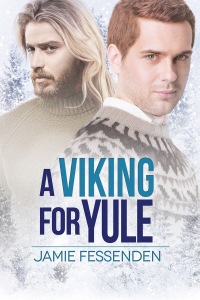
Despite having a reputation for dark stories about physical violence and psychological trauma (which kind of just… happened), I have a soft spot for Christmas. In fact, my very first published work was a Christmas story, and I’ve written several others over the years. So for those looking for something lighter for the holiday season (which is almost over, I know), here are the stories I’ve published over the past 13 years:
The very first story of mine that was accepted for publication was The Christmas Wager (2010), a Christmas “Regency” (though I set it in the Victorian Era) modeled after similar straight romances stories I’d read from other publishers. It was intended to be light and fun, though reality intervened somewhat – it was impossible for gay men to have an open relationship during that time period, so the fear of discovery had to play a part. But the stories I’d read weren’t terribly well researched, so I assumed nobody would care if mine was sloppy with historical details. I was wrong. The story did well, but readers – especially those in the UK – were put off by the historical and cultural issues. So much so, that I felt compelled to go back and correct them, as much as possible, with the aid of some editors from England. Which is why the novel now has a second edition. It’s now a work I’m very proud of.
My next holiday story (technically, a Yule story, rather than Christmas) was written and submitted later than The Christmas Wager, but it was published first, as part of Dreampsinner’s 2010 Advent Calendar anthology. It was a story about two Icelanders in the Viking Age. One had killed the other’s brother in a feud and the other had attempted to get vengeance, only to be cut down, as well. When he wakes, he discovers he’s being nursed back to health by his enemy. But he soon discovers that this man has grown to hate the feud that wiped out both of their families, and is actually very kind. Can our hero put aside his duty to avenge his brother and pursue peace?
The Meaning of Vengeance was an odd fit for the Advent anthology, in particular because the dark tone of the story didn’t match up with reader expectations, when they bought an anthology with a cute cover of two men decorating a tree in their underwear. I’d also felt, when I wrote it, that it had to have explicit sex in order to sell, but the scenes never really felt right. If anything, the story had a YA feel (both young men were in their teens). So I ended up pulling it from Dreamspinner, reworking it as a YA story, contracting Catherine Dair to do a new cover for it. Unfortunately, it isn’t yet available, because I’m still reworking the pacing. But I’ll have it out next year, under my YA pseudonym, James Erich.
The Healing Power of Eggnog was inspired by the visits I used to take to visit my first boyfriend at Goddard College. Montpelier and Plainfield are real places in northern Vermont and the Christmas tree farm is based upon the many such farms in New Hampshire.
This story was written back when I believed readers wanted “Hallmark Christmas movie” endings, which have the leads fall in love in a very short time. That turned out to not be the case, as two people falling in love over a few days’ time was one of the main criticisms of the story. I’ve been poking at it for a rewrite, but that’s for the future. I do think it’s a nice story, as is—it makes me cry, every time—but the timing needs a little work.
Though not my first foray into self-publishing, a beautiful cover by Reese Dante and professional editing by Theo Fenraven truly made A Cop for Christmas stand out.
This one is close to home—literally. It takes place in the White Mountains of New Hampshire, near Gorham, where I grew up. Crystal is a tiny town my father once owned a house in. I remember it as about 5 houses clustered around a tremendous waterfall. Fortunately, one of the houses had two girls around the ages of my brother and I, so we had incredible (and somewhat dangerous) adventures together, exploring the river and the forest surrounding it. But I digress…
A Cop for Christmas actually began as a short story idea I had in my 20s. In the original, a cop pulls a guy over and tickets him for speeding and it turns out the cop and the guy’s parents are next door neighbors and friends. My writing chops weren’t up to the task back then, but I always thought it would make a good starting premise. Et voila!
The character of Sam in A Cop for Christmas cried out for a story of his own. Sure, he was a bit pathetic and not strikingly handsome, but after we left him in the hands of Jackie (aka “Auntie Mame“), he traveled the world and grew up. He still had panic attacks during snow storms, but otherwise, he was standing on his own two feet.
Until Jackie decides they should spend Christmas in the snowiest place on Earth (or nearly): Iceland. Worse, she skips off, leaving him in the hands of Arnar, a local “nephew” of hers, to go on a tour of the countryside.
If I had to choose a favorite book of mine, I’d pick this one. I spent months wrapped up in information about Iceland, chatting with friends who lived there, eating food I had shipped, and wandering around Reykjavik and the Icelandic countryside via Google Streetview. By the time the novel was finished, I was exhausted, but I had a very hard time saying goodbye to my virtual vacation in Iceland. I honestly had felt as if I was there. I only hope I get the chance to visit in person someday. It’s a beautiful country.
During my research for A Viking for Yule, I came across the Nordic spirit or being called “Tomte.” (Pronounced “TOM-teh.”) The name is specifically Swedish—it’s known by different names in different Scandinavian countries, such as the “Nisse” (NIH-seh) or the “Tomtenisse.” It resembles a little old man dressed in red clothes with a pointy hat and pointy boots (which is basically peasant clothing from the middle ages). The tradition that specifically interested me was one in which the
Tomte is believed to be the spirit of a human who’d lived (and died) on a farm a very long time ago, guarding over his descendants. Combine that with folktales of people stumbling into the land of the fae for a night, only to return to discover several years have passed in the human world. (No, this idea did not originate with Rip Van Winkle. Irving took it from European folklore.)
So this was the seed from which my novel Tomte grew. It was also my first attempt at Urban Fantasy—inserting fantastic elements into a realistic, contemporary setting and slipping them in casually, so the reader has to pause for a moment to figure out if it’s real or not. (That’s my definition, anyway.) I’m proud of the result, and hope to write more like this in the future!
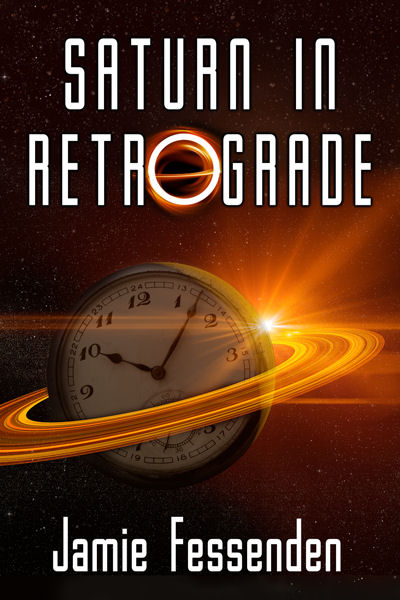
Lastly, I’ll add in the fun “Twelve Days of Stories” that Wrote Podcast did in 2015. The idea was to assign each writer one of the 12 days of Christmas from the song and see what they could come up with in a very short period of time. My story was based upon 5 rings, and I decided to place my story on a space station orbiting Saturn. The rings begin with a ring on the coffee table in the café our main character works in and expands to the rings of Saturn and the space station (which has artificial gravity induced by centrifugal force). It’s short and I’d love to expand it someday, but you can listen to the current version here for free!
When we bought our house over a decade ago, it came with several acres of forest. Unfortunately, hunters stalked the woods in autumn and coyotes prowled at night. So… not entirely safe for a walk with the puppies. But it’s my land, and I’ll be damned if I won’t walk my dogs there.
I don’t object to hunting, especially since our yard is literally overrun by wild turkeys at certain times of year and I see deer everywhere around here. But I still don’t want people walking around my yard with loaded guns, possibly mistaking my foxhound for a deer.
It’s legal to hunt in any forest in NH, no matter who owns it, as long as there aren’t “No Hunting” signs posted. This is what the local police informed me, after I noticed a hunter literally parking on the side of the road and walking directly into my woods with a gun strapped to his shoulder.
I gave in and posted signs. That hunter moved on to a more hunter-friendly forest (I assume). I haven’t noticed any others since then. The dogs and I do wear orange vests in the fall, just in case. (Although you’ll notice I forgot them on the day I took these pictures.)
Orange vests don’t deter coyotes, but they generally won’t bother a human with two large dogs. I haven’t seen any directly, but I’ve seen pieces of dead animals, including the severed head of a deer, so I know they’re there. (I just bought a couple of game cameras, so I’m hoping I’ll be able to catch some pictures.)
I discovered The Campsite when we first moved in, so it’s not a recent thing. That was thirteen years ago, and it was clearly old then. (These photos were taken last fall, I believe, just before Kumar passed away.) It was probably in use sometime in the mid 2000s, but abandoned before the property was sold to us.
It still creeps me out.
Here’s what I found:
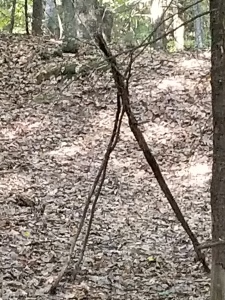
Upon entering the forest from the public dirt road, we’re greeted by a tripod of sticks. This could be caused by branches falling and landing like this—it does happen—but I suspect it was erected as a marker, because just up over that hill is The Campsite.
It looks like an empty patch of woods, at first… except for a ruined gas grill. It’s mostly fallen apart, but that much metal will take decades, if not centuries, to completely rot away. My first thought was to get the damned thing out of there, but it will take some lugging. It’s at least a couple of acres from the house. In the opposite direction, the public road is a a bit closer, but you have to go down a steep hill and cross a shallow ravine filled with a murky pond and poison ivy.
A little searching around, when I first found the site, turned up several beer cans with bullet holes in them. In fact, I find these throughout the forest, which gives me pause. Drinking and shooting practice aren’t a great combo.
Then… I discovered this. It’s the top of a tent. Maybe it was completely buried, at one point, but over time weather eroded the soil and exposed it. Or maybe the tent just collapsed and was covered by debris. Maybe the campers left the tent set up there for a while, thinking they’d keep using it, but it eventually collapsed. Perhaps over the winter snow crushed it.
But seriously, it’s really dug in there. And I don’t think it’s a simple matter of a collapsed tent. That’s not mere speculation…
I now present Exhibit A:
What are we looking at? It’s the actual nylon body of the tent, which the pups (Kumar was still with us, at the time I took the photos) and I found almost completely buried several feet away. I pulled it up, which is why we can now see so much of it. If the tent had simply collapsed, this wouldn’t be the case, obviously. It would be where the frame is. So why bury the two separately?
Exhibit B is something else I found just poking up out of the ground a bit further into the woods: clothing. A pair of black cargo pants and a black jacket. Both are pretty rotted, but still intact.
I seriously expected a skeleton to come up with these when I pulled them out of the ground. Fortunately, that didn’t happen. But why bury them out there? Did someone change clothes and decide they didn’t need their pants and jacket anymore? Was someone murdered and stripped naked? If so, what happened to the body?
People are weird and do weird things. Especially out in the boonies. But my writer brain can’t help but wonder at all this…
Fang: Gothika is now available for preorder! (It will be released on October 15th, in time for Halloween!) This is a reunion of some of the authors of the Gothika anthologies originally edited by Eli Easton and myself (#5). Eli and I were joined by Sue Brown and Kim Fielding in this presentation of creepy vampire stories for the holidays!
TRICKLE OF BLOOD by Sue Brown
My vampire clan is dying. Human blood is too tainted to sustain us. On the brink of giving up, the last thing I expect to find is the saviour of my clan, a non-human. He is my mate.
I know I must ask the impossible of my mate. If he walks away my clan will die. I don’t know if I’ll be able to let him go if he says no. Do I give him that choice, or his body and blood mine to command?
ADARK HEALING by Eli Easton
The life of a healer is a lonely one. Feared by the local villagers for being both a healer and an albino, Darian lives alone and spends his days picking herbs, making remedies, and talking to his dead teacher. Then one day he finds a mysterious man in the woods who’s been shot through with an arrow. Darian takes the man, Locke, back to his little hut and tends him as best he can. Locke is a strange creature—at times imperious and at other times nearly feral. But he is stunningly beautiful, and, more importantly, he finds Darian beautiful and unique—like a white unicorn. The two lonely men take comfort in each other’s company, and they bond over the days of Locke’s healing. But when killings begin in the nearby village, Darian must face both the nature of the man he invited into his bed and the villager’s wrath.
THE QUARRY BOY by Jamie Fessenden
A visit from a fearful apparition has marked Josiah Crayne as the next to die. August Walker returns home to confront the ghosts of the past—not only his painful memories of a friend’s death, but also his own sexuality.
As August investigates the tragedy that’s befallen the Craynes, it may turn out to be too much for him to bear—especially when he begins to suspect this man marked for death could return his affections.
FARKAS by Kim Fielding
Lee Harker has never fit in anywhere. Not with his immigrant family in rural Nebraska, not on a Navy ship during World War II, and not in Los Angeles as associate in a law firm. But when he’s sent to a remote mansion to complete some paperwork for the reclusive Vincent Farkas, Lee encounters the most unsettling circumstances yet. Caught in a place where things truly do go bump in the night, he must face his fears—and his desires—and acknowledge his true nature.
After the loss of our beloved Kumar, we grieved for several weeks. At first, Nelson seemed to enjoy being an “only puppy,” since he was now the center of attention and getting all the love and pets he could ask for. Not that we hadn’t love him before, but now we no longer had “Erich’s Kumar” and “Jamie’s Nelson,” the way it had kind of settled into for the past three years. Now Nelson was it!
But it became clear he was missing his older brother. Walks weren’t as much fun anymore, without Kumar sniffing at interesting things beside him. Everything was more… subdued, for Nelson and for us.
But Erich and I had made the decision to get another dog, back when Kumar was undergoing chemo. It wasn’t an easy decision—we didn’t like the feeling that we were looking to “replace” Kumar. Nothing could ever replace Kumar. But I knew how hard it would be when we lost Kumar. I’d lost my dog, Lady, shortly before meeting Erich, and I was so devastated I couldn’t even think about getting another dog for almost a decade. Eventually, I persuaded Erich, and he promised me another puppy for Christmas.
It didn’t work out that way. But Erich told me he still wanted to honor his promise to me, even though it was painful now. So I went to the local shelter websites and discovered an adorable yellow Lab pup. I called the shelter and they said he was still available, so my friend Claire and I decided to visit them in a couple of days. I wasn’t going to get a pup without Erich’s approval, of course, but I thought it might be easier if I made the first steps while he was working. However, he insisted upon taking time off work to accompany us.
We drove to the Cocheco Valley Humane Society in Dover, NH and met the puppy I’d been interested in. He was very fearful of strangers and not particularly interested in us. So while we debated if we wanted to win him over, the staff brought out some other dogs they thought we might be interested in. The first was a sweet girl who’d recently had pups. We’d kind of hoped for a large dog, though. She was small, and after a polite greeting, she drifted away from us. One of the problems with shelters is that the dogs come to love the staff more than the weird strangers who come in. It’s understandable, but makes it more challenging when you want to find out if a dog will fit into your household.
Then they brought out Duke.
Duke immediately ran to us and began slathering our faces with dog kisses. He had no fear of strangers, he was big—we still don’t know how big he’ll get, but he’s nearly as big as Kumar and obviously still growing—and he seemed to like Nelson. They played for a bit, though Nelson was very nervous, especially after the 40-minute car ride. (He hates being in the car.) I took one look at Erich’s delighted smile as Duke tried to bathe his entire face in wet dog kisses and I knew we’d found our pup.
I’d be lying if I said Duke was settling in easily. We’ve had a much bigger struggle with him than we ever did with Kumar and Nelson. His idea of play is to body slam you, whack you in the face with the back of his head, gnaw on your hands, and push you down the stairs. Woo-hoo! I almost never raised my voice to Kumar, but Duke has me shouting myself hoarse and spraying him constantly with the water bottle. Crate timeouts are about the only thing that will calm him down, once he gets going.
But when he is calm, he’s a sweet, loving pup we can’t resist. We’re doing our best to help us all adjust to one another. Erich and I are in our 50s and have health issues that limit how much we can run around with him. I take Duke and Nelson for walks in our forest once a day, we’ve booked him into doggie daycare (though he’s occasionally had to be given timeouts there for fighting over toys), and we have a dog pen he and Nelson can run around in. Nelson doesn’t seem very interested in playing with Duke, most of the time. Sometimes. But he doesn’t have nearly as much energy as Duke has (He’s five and a half, now—no longer full of puppy energy), and it’s been a challenge to get them to play nicely together. Nelson can hold his own against Duke, despite Duke being a bit larger, but he doesn’t always seem to like it. So we’re trying to keep an eye on them and pull him out when he’s tired.
Overall, it’s been a challenge, but Duke is gradually learning to behave himself with us. We still haven’t dared invite our friend with the small dog over—the last thing we want is for Duke to hurt him, even inadvertently—and we still have to give him a lot of timeouts when he’s out of control. But more and more he’s becoming part of our family.
It’s the end of an era for my household. On Tuesday, nearly midnight, we were forced to make the hardest decision in our 20+ years together. We had to say goodbye to Kumar.
In 2010, we moved into our new house, got a dog, and got married—in that order. When we looked around the SPCA shelter, we couldn’t agree on any of the dogs there, and it was only by chance that a dog who’d been outside for a walk happened to return, just as we were leaving. We knew instantly that he was our dog.
Kumar was a year and a half old, full of energy and love for every person and dog he met (though he gave the cats a wide berth). We had trouble finding a harness that could hold him, at first, and he slipped his lead more than once, chasing after turkeys or deer in the forest, while I ran after him, cursing. But once I caught up to him, one look from those soulful brown eyes swept away my anger in an instant. We could never get mad at him.
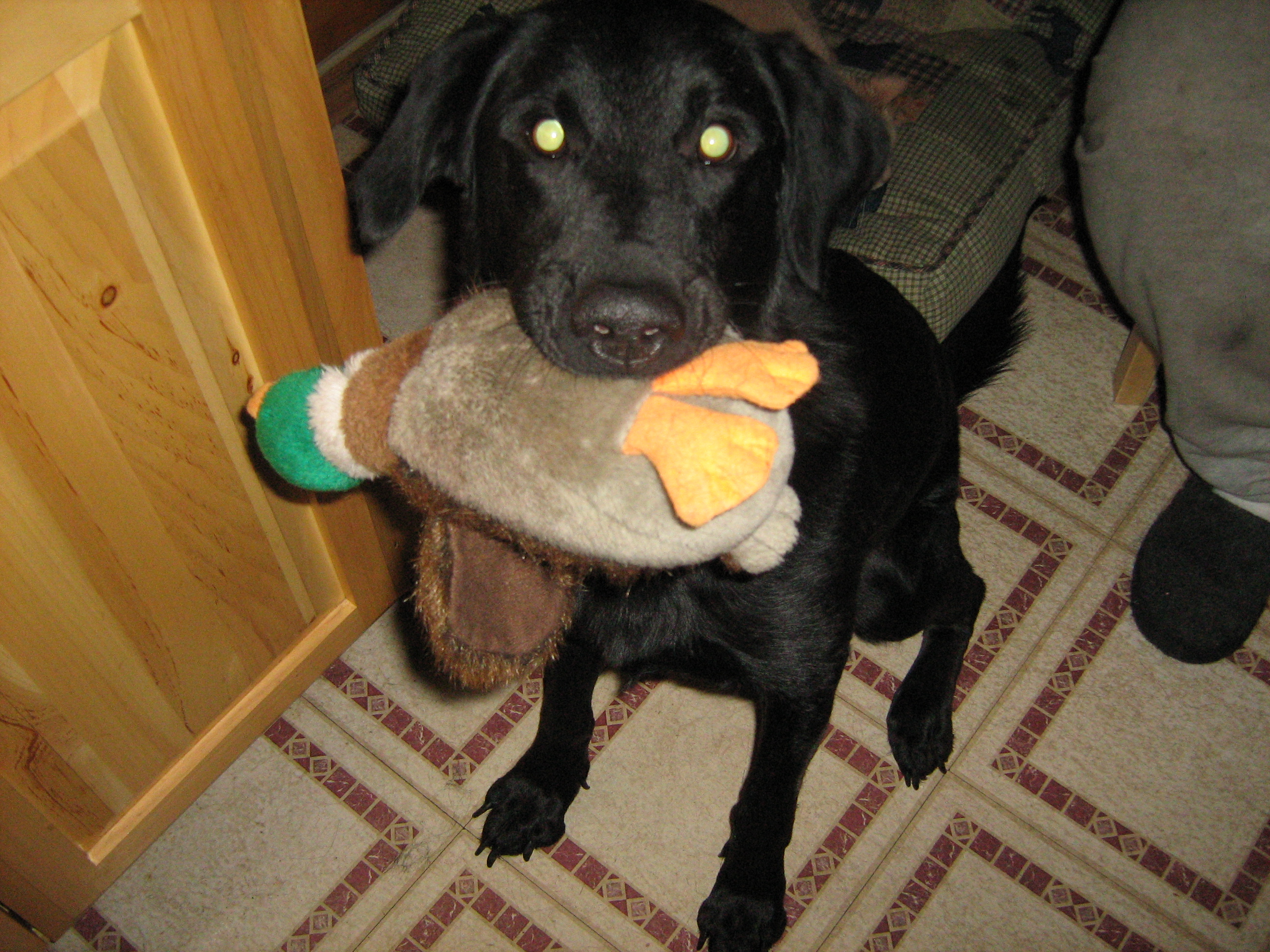
He was the inspiration for the character, Shadow, in my first successful novel, Billy’s Bones—his love of stuffed ducks, which he used to communicate with us in ecstatic honks, his epic battle with stairs, and yes, even the running off into the woods made it into the story.
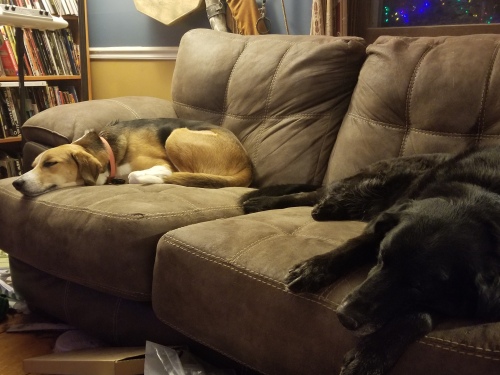
He stayed with us for eleven and a half years. During that time, he grew old, of course. His muzzle turned gray and his back legs began to give him a lot of trouble. He seemed unaware of it for a long time. He would slip, but recover and go back to chasing his brother, Nelson (an American Foxhound pup we adopted three years ago) around the living room or playing his favorite game, tug-of-war with a stuffed animal. The first time his back legs gave out completely, landing him flat on the ground, both legs splayed out, unable to get up without help—that shocked him as much as it did us. We started taking him to physical therapy and he ended up on more anti-inflammatories and painkillers than we liked. But unlike with Nelson, pills were never an issue for our intrepid Labrador, who doubled as a vacuum cleaner and food disposal unit. We carpeted the stairs, so he wouldn’t slip on them, and life went on.
Then one day last summer, Kumar could barely walk and his belly was shockingly bloated. We took him to the emergency vet and were told his spleen had cancerous tumors all over it. He was bleeding internally, and though they could remove the spleen, his chances of survival were very, very low. Erich was too distraught to deal with the doctors, so I held myself together and authorized the surgery while trying to hold my husband and Kumar’s anxious “baby brother” together.
Kumar surprised everyone. He came through the surgery fine and when we picked him up, despite warnings that he’d have to be carried to the car and up and down stairs (all 85 pounds of him) for several days, he refused any assistance. He walked out to the car under his own power and jumped over the ramp I’d bought for him to get into the backseat.
We took him to the best oncologist in New Hampshire, by all accounts, but the prognosis was grim. He had a very aggressive form of cancer, despite the tumors having been removed. He was unlikely to survive more than a few weeks. We authorized chemo-therapy, a course of five treatments over the next several months—though we were warned he might not even make it that long.
Again our boy surprised the doctors. He handled the chemo well, only feeling nauseous for a few days after each treatment (they were spaced two weeks apart) and bouncing back to his usual, energetic self after that. Whenever people asked how old he was, they were shocked to learn he was going on 13. His stamina wasn’t great, but otherwise he still ran around like a dog half his age. He got through the chemo treatments (the photo was taken by the oncologist when he “graduated”) and was his usual self throughout the holidays. I had hopes he’d stay with us until the spring.
But on Monday, he was feeling sluggish and had a low appetite—a definite warning sign with Labs! We’d walked in the forest twice that weekend and the weather was bitterly cold, so we kept an eye on him, hoping it was just that he was feeling some aches and pains from that. But it grew worse, until he wouldn’t walk more than a few feet before plopping down on the ground Tuesday afternoon, even outdoors. We took him to the emergency vet again and found out that he was bleeding again. The tired feeling he had was from anemia. His belly was once again filling up with blood and an ultrasound revealed masses all over his liver. This time, surgery wasn’t an option.
Erich could barely speak—Kumar was even more his baby than mine—so I spoke to the doctor. They took us into a warm, cozy room with dim lighting, soft couches, and an electric fireplace. Then we cuddled our beloved pup and made him feel loved, while he slowly went to sleep forever. Nelson was with us, and though he’d earlier whimpered and tried to follow Kumar into the back room for the exam, he seemed to know when Kumar was gone. He didn’t even look back as we left the room with Kumar still there.
After the serene brutality of that night, we’ve had to relive the pain several times as we called to cancel vet appointments, doggie daycare (we kept Nelson home with us the following day—more for us than for him), and physical therapy. The sight of Kumar’s dog bed and bowl are difficult, but we can’t remove them yet. Besides, Nelson likes to sleep in Kumar’s bed. He did that night.
Life goes on. But it’s going to be hard, every time we think about him. Still, if we hadn’t walked into the SPCA shelter that particular day and seen him by the slimmest chance, our lives would have been so much less. We were there for him right up to the end, and he knew he was loved.
Despite the pain of our loss, we wouldn’t change a thing.
I’ve just been looking back through my posts and realized it ‘s been a very long time since I updated this blog. I apologize. I didn’t mean to be away so long. In fact, I started several posts over the intervening time, but couldn’t finish them. Some were controversial. Others were simply too meandering. So a quick update on what’s been going on with me:
It’s been a rough year, but not horrible. Everyone in the world has felt the effects of COVID-19, of course. Though several of my family and friends came down with it, nobody suffered any serious effects. I’m very grateful for that. But my husband and I have grown isolated during the lockdown. We’re still happily married, despite being in each other’s hair. Erich tends to lock himself in his office during work hours, so we see each other about as much as when he worked away from home. 🙂 And we’ve been gathering together with vaccinated friends and family recently.
Our eldest dog has been worrying us for a while. He suffers from hip dysplasia and goes to physical therapy for it, but the real issue is cancer. He nearly died from a ruptured spleen this summer, but fortunately was saved by the emergency vet. Now he’s undergoing chemotherapy and doing well, but we’ve been warned he has a very aggressive form of cancer, so we’re just taking it one day at a time. We’ve had him since just before we married, eleven years ago, and losing him is going to be brutal. 😦
I have been writing, though it sometimes feels like I have no energy for it—or anything, really. It turned out to be a mistake, pulling all of my novels and novellas from Dreamspinner Press. I’ve republished my bestsellers, but the remaining list was too long and I was overwhelmed (see “struggles with depression”), so I made the decision to give DSP permission to relist a few of my backlisted novels and novellas, simply so I could stop worrying about it and move forward again.
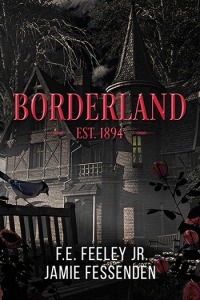
As a result of this, I’ve finally updated the sidebar links, so if you click on a cover image, it should take you to an actual published ebook, either self-published or through DSP (and one through Beaten Track Press—Borderland, co-written with F.E. Feeley, Jr.). The paperbacks aren’t all there yet. I’ve self-published Violated as an eBook, for instance, but I’ve had trouble with the paperback formatting, so it isn’t listed yet. If you see a paperback going for an outrageous price, don’t waste your money. Those are people selling used copies and trying to scam you. The legit paperbacks won’t be that pricey.
Murderous Requiem and By That Sin Fell the Angels are going to be relisted soon. Several of my horror stories, including all of the Gothikastories, are being compiled into an anthology. That should come out soon, as well.
As I mentioned, I have writing, so you’ll be seeing new stories from me in the coming months—a new addition to the Gothikaseries, for one—but probably not until the Fall.
Borderland was a “labor of love,” as they say, from the start. FE Feeley, Jr. (henceforth referred to as “Fred”) proposed we work together on a horror novel over two years ago, and we tossed ideas back and forth until we settled on a ghost story set in a haunted inn in Vermont.
So much time has gone by, it’s now impossible to sort out who thought of what, but I recall Fred being interested in Vermont, because he wanted to visit New England. I’d never officially lived there, but they don’t call Vermont and New Hampshire the “twin states” for nothing. Jump in the car and you can reach anywhere in either state in a few hours. I’ve spent a lot of time there, especially near the border. It’s a gorgeous state: heavily forested, mountainous, and dotted with old farms. It’s about the same size as NH (but “upside-down” ;-p ), and the population is just over 600 thousand—half that of NH, and we’re not exactly struggling for elbow room.
Fred can also be credited with the idea of working the flu epidemic of 1918 into the story. I want to be clear that he thought of this years before the COVID-19 pandemic. Frankly, we might have veered away from the topic, if we’d known about the pandemic, since so many readers have had family affected by the virus. Instead, one might call it a bit of prescience. The story had already been submitted to our publisher by the time the pandemic hit the USA.
Writing with another author was a new experience for me, and it didn’t always go smoothly. We wrote scenes and showed them to each other, usually liking what we were piecing together, but as the order of the story was rearranged, some scenes had to be tossed and others extensively rewritten. One scene was simultaneously written by both of us, leaving us with the decision of which to keep. In final edits, we noticed that the music box was somehow upstairs in a bedroom and on the fireplace mantel in the living room at the same time. And who the heck was Meghan? Oh, that’s right. We changed her name to Grace…
But under the guidance of our wonderful editor, Debbie McGowan, at Beaten Track Publishing, we hammered the novel into something we’re all very proud of. And the reception has been wonderful. Here are some quotes from our favorite review sites:
“I very highly recommend this ghost story. It is one of my favorite reads in a long time. If you have Amazon, one-click it now. You won’t be sorry.” — Dan at Love Bytes Reviews
“If this is what a story becomes when FE Feeley and Jamie Fessenden collaborate, then sign me up for more. These two have put together an amazing combination of mystery, thriller, and horror, and then intertwined within all of that darkness, is a sweet, poignant romance that will stick with you long after “the end”.” —Melissa Brus at the Paranormal Romance Guild
“It was with great expectation I awaited this book…..I am a longtime follower of these two authors and expected nothing less than perfection….I received it hands down!!” — Gloria Lakritz at the Paranormal Romance Guild
“Yes, there is a sad element to this book. But there’s also hope, as well, and that’s deftly written by FE Feeley and by Jamie Fessenden, as well. I really enjoyed this book. It was an emotional roller coaster for me. It won’t necessarily be that way for everyone, although I would imagine that most people that read this book will have a definite visceral reaction to it. So, for me, Borderland is a lovely piece of writing. I thoroughly… I’m just really glad that I got to read it, and I’m giving it five stars.” — Kazza at On Top Down Under Reviews
I’m very proud of the work Fred and I did on the novel. Perhaps in the future we’ll collaborate on another one, and hopefully our process will go a bit smoother from our experience with Borderland. In the meantime, I hope readers enjoy their visit with the hotel and it’s residents… both benign and evil.
They were young. In the prime of life and recently married. And then the diagnosis came. Cancer.
George and Jason make arrangements to travel back to George’s home state of Vermont so he may pass away in the town where he grew up, but a terrible storm diverts the couple into the gates of an out-of-the-way hotel called Borderland.
Sure, the employees are well dressed and polite. Sure, the food and entertainment are old-time fare. But it’s all a schtick, right?
Or is there something far more sinister at work here?
Welcome to the Borderland Hotel, where you may check in, but you’ll never, ever leave.
I’m sad to report I’ve had to break away from Dreamspinner Press. The publisher has been having financial difficulties for a while, and over the past year, authors haven’t been receiving their royalties—at least, not consistently. I still hold out hope that they’ll get things in order and return to being the reliable press they’ve been for most of the decade I’ve worked with them, but the hit they’ve taken to their reputation means it’s in my best interest to step away. The last book I had released through them (Small Town Sonata) sold very badly. It could be the book, of course, but there are a lot of factors to consider. Many readers are boycotting DSP books and a lot of review sites won’t review them.
This is not going to turn into a rant about how hurt I am or how betrayed I feel. I’ve been in the corporate world far too long to view this as anything more than a company that took too many risks and ended up suffering a serious shortfall in revenue. They tried to act as if everything was fine for a while, as most companies in this situation do, because if a company is honest about their finances falling apart, they start a mass exodus, which turns “financial trouble” into “bankruptcy” very quickly. I’ve seen it happen many times. I don’t like it, but it’s the way businesses tend to operate. Many authors feel they’ve had their royalties stolen. I don’t see it that way. I see it as my royalties haven’t been paid yet. I still expect to be paid, eventually. The only thing I feel about the situation is sad. I was with DSP for a long time, and my experiences publishing through them were generally very good.
My biggest concern right now is getting my books to readers. I’ve just pulled 20 novels and novellas from publication, which means a good percentage of the links in that side panel are now invalid. I plan on submitting my YA novels—Seidman and the Dreams of Fire and Gods trilogy—to agents. There’s no reason they can’t be published in the “mainstream” YA market. YA agents and publishers are starting to embrace LGBTQ characters.
I might submit some of my adult novels/novellas to other publishers, such as Beaten Track Publishing, since I have a book with co-author F.E. Feeley, Jr.coming out through them this spring. Most, I think, will be self-published. But that will take time. I have permission to use some of my cover art, but I’ll have to commission new covers for many stories.
In some cases, I might do a little rewriting. Readers almost unanimously hated a particular moment in We’re Both Straight, Right? so I think I’ll rework it. Similarly, the epilogue of Billy’s Bones was problematic.
I missed Halloween with this post, so I’ll aim for the Day of the Dead instead! My intent was to blog about some of the scary/creepy stories I’ve written over the years.
I love horror, so I’m actually surprised I haven’t written more of it. For a very brief time, I made micro-budget horror films. They were of variable quality, and unfortunately you can only see one, at present, on YouTube. It’s really grisly, so don’t watch it if you don’t go for gore. I made it for the Eerie Horror Fest in 2006. They had a contest for filmmakers to submit ads for the festival. Sadly, ours “won,” simply because it was the only submission, but I’m proud of it. We were experimenting with lighting and learning how to use our new camera crane (basically a teeter-totter device that allowed the camera to smoothly pan up and down). If you go to the YouTube channel for Dunkirk Studios, you can see some trailers for other films we worked on. Some made it into festivals, but our big project, “The Resurrection,” was never finished, due to lack of locations willing to allow naked people covered in blood to run around on their premises. It would have been epic. EPIC.
After publishing some short stories and novellas (one I’d consider novel-length, in its second edition), I decided to dive into a full-length novel in same vein as The Da Vinci Code, in which the characters are piecing together an occult mystery by researching ancient tomes. The result was Murderous Requiem.
In this novel, I delved into the writings of Marsilio Ficino (1433-1499), the Italian scholar who was more or less responsible for bringing the works of Plato to the West, and who believed that music could heal the human body by bringing our pure spiritual form into harmony with our physical form. He was a jack-of-all-trades – a doctor, philosopher, writer, and composer – so the story is about the discovery of a mass written by Ficino, which could go one step further and pull the soul back into the body after death. The story involves a beautiful drug addict with the voice of an angel, a murder, nearly everything my music theory major taught me in college, and ominous, supernatural flocks of ravens.
Bigfoot Hunters in Love was originally a free short story I gave away on my blog. You can still get it here. But I thought it needed more, so eventually I expanded upon it and contracted Scott J. Coatsworth to create a cover that conveyed both the silly elements of the story and the creepiness. It’s about a man who moves to the country and is chased into the forest one night by a monster. He loses his slippers and his dignity, eventually crashing headlong into a man who’s been hunting the creature for years. Along with our hero’s trusty dog, Thor, they set out to uncover proof that the creature exists.
Sadly, the anthology of bizarre stories set in the Old West edited by my friend and fellow author, Kim Fielding, is no longer available, except in used paperbacks. I’ll have to republish my short story from it: The Sheriff of Para Siempre. This was one of my favorite of my own stories, about two young men hiring themselves out as law-enforcement in a dying mining town. It ultimately involves a man who simply won’t stay dead, and the ending is the most tragic thing I’ve ever written. As one reviewer said: “I’m a blubbering mess right now, so if I’m not making sense, you can blame it on Jamie Fessenden. Quite simply, this story broke me. It broke my heart and it made me speechless.”
Author and friend, Eli Easton, came up with a great idea for an anthology: Gothic horror romances to be released each Halloween, each with a specific theme. The first was called Gothika #1: Stitch, and Eli did the cover for it. It was gorgeous. I even made a book trailer, which looks a bit clunky, in retrospect, since it was the first time I played with Movie Maker. But I’m very proud of the music I wrote for it. (Yes, all those tens of thousands I spent on my music theory degree paid off!)
I won’t describe all the wonderful stories in these anthologies, since that would take forever, but I’ll briefly describe the stories I wrote. For Stitch, I wrote a story called Watchworks, about a watchmaker in Victorian London, who is called to the home of a wealthy gentleman for a bizarre purpose: to repair the intricate mechanical hand of a handsome young man. The hand is so lifelike, it’s impossible to tell it isn’t flesh, unless the artificial skin is removed. But as the watchmaker attempts to repair the hand, he begins to suspect more and more of the young man is clockwork. Just how much of him is still human?
For Gothika #2: Bones, I wrote a Young Adult story about two teenagers living in a Latinx neighborhood in Manchester, New Hampshire. One has a grandmother (abuelita) who runs a botánica – a shop that sells folk medicine and magical items used in vodou rituals – and when he attempts to acquire a copy of the dreaded Book of St. Cyprian for the shop, he accidentally releases a dark spirit that possesses his friend’s dog. The two boys work frantically to exorcise the spirit, before it can hurt the dog or, worse… abuelita finds out what they’ve been up to.
Don’t expect any sex with this one, but it’s fun and creepy and has some interesting stuff about local vodou practices. I had a couple of Spanish-speaking friends take me to the botánica in Manchester, so we could quiz the owner and see what she had for sale. And, yes, the Book of St. Cyprian is a real book, rumored to be so evil, anyone who reads it risks losing their soul.
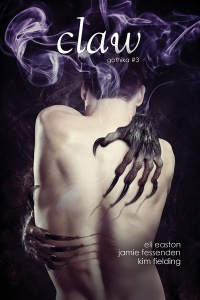
Isolation (Gothika#3: Claw) is adapted from a screenplay I wrote, but was never able to film – mostly because we weren’t able to find a good location. It follows a man who once had a great relationship with his best friend and lover, but chickened out of a long-term gay relationship and married a woman. Years later, after his marriage has disintegrated, he comes back with his tail between his legs, hoping to rekindle what he and his friend once had.
But he finds his friend living deep in the woods, isolated from the town, and not at all willing to get into a relationship with him… or anyone, apparently. And he soon discovers there is something sinister prowling through the forest at night…
For Gothika #4: Spirit, the theme was ghost stories, and I delved into the history of the old mill buildings in New England, which were plagued by fires that killed massive amounts of workers – usually young women. The most famous is the Triangle Shirtwaist factory fire which killed 146 workers, mostly Italian and Jewish immigrant women in their teens and early twenties (the youngest was 14), because the doors to stairwells and exits were locked to prevent workers from sneaking out on breaks.
For The Mill, I adapted a ballad about the Granite Mill to my fictional mill building, and had a team of ghost-hunters investigating appearances that have frightened off construction workers so often the building now lies empty and abandoned.
The last Gothika we did was called Contact, and it dealt with stories of alien abduction.
My story was called, not surprisingly, Abduction. It’s about a man who visits an old boyfriend and finds that he’s basically had a nervous breakdown and ranting about aliens abducting him and implanting things in his body. Our hero agrees to stay the night and help watch for aliens, and to his horror, he’s abducted.
The aliens don’t experiment on him, but that’s because he was abducted by different aliens than his friend was abducted by. In order to save his friend, he has to take sides in an interstellar war and befriend the commander of the ship he’s a prisoner on. Over time, he and the commander discover they have a connection…


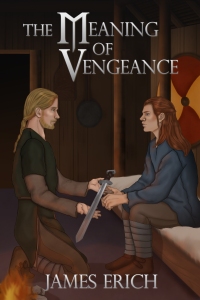 The Meaning of Vengeance was an odd fit for the Advent anthology, in particular because the dark tone of the story didn’t match up with reader expectations, when they bought an anthology with a cute cover of two men decorating a tree in their underwear. I’d also felt, when I wrote it, that it had to have explicit sex in order to sell, but the scenes never really felt right. If anything, the story had a YA feel (both young men were in their teens). So I ended up pulling it from Dreamspinner, reworking it as a YA story, contracting Catherine Dair to do a new cover for it. Unfortunately, it isn’t yet available, because I’m still reworking the pacing. But I’ll have it out next year, under my YA pseudonym, James Erich.


 When we bought our house over a decade ago, it came with several acres of forest. Unfortunately, hunters stalked the woods in autumn and coyotes prowled at night. So… not entirely safe for a walk with the puppies. But it’s my land, and I’ll be damned if I won’t walk my dogs there.
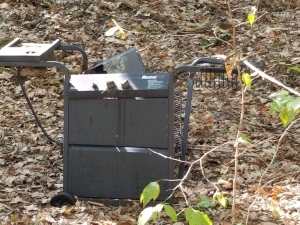 It looks like an empty patch of woods, at first… except for a ruined gas grill. It’s mostly fallen apart, but that much metal will take decades, if not centuries, to completely rot away. My first thought was to get the damned thing out of there, but it will take some lugging. It’s at least a couple of acres from the house. In the opposite direction, the public road is a a bit closer, but you have to go down a steep hill and cross a shallow ravine filled with a murky pond and poison ivy.
 Then… I discovered this. It’s the top of a tent. Maybe it was completely buried, at one point, but over time weather eroded the soil and exposed it. Or maybe the tent just collapsed and was covered by debris. Maybe the campers left the tent set up there for a while, thinking they’d keep using it, but it eventually collapsed. Perhaps over the winter snow crushed it.
 Exhibit B is something else I found just poking up out of the ground a bit further into the woods:



 I’m sad to report I’ve had to break away from Dreamspinner Press. The publisher has been having financial difficulties for a while, and over the past year, authors haven’t been receiving their royalties—at least, not consistently. I still hold out hope that they’ll get things in order and return to being the reliable press they’ve been for most of the decade I’ve worked with them, but the hit they’ve taken to their reputation means it’s in my best interest to step away. The last book I had released through them (Small Town Sonata) sold very badly. It could be the book, of course, but there are a lot of factors to consider. Many readers are boycotting DSP books and a lot of review sites won’t review them.
 I missed Halloween with this post, so I’ll aim for the Day of the Dead instead! My intent was to blog about some of the scary/creepy stories I’ve written over the years.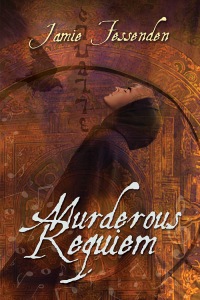

 Sadly, the anthology of bizarre stories set in the Old West edited by my friend and fellow author, Kim Fielding, is no longer available, except in used paperbacks. I’ll have to republish my short story from it: The Sheriff of Para Siempre. This was one of my favorite of my own stories, about two young men hiring themselves out as law-enforcement in a dying mining town. It ultimately involves a man who simply won’t stay dead, and the ending is the most tragic thing I’ve ever written. As one reviewer said: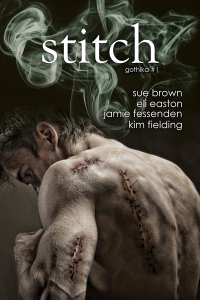








 Jamie Fessenden's Blog